- The United States says it captured Venezuelan President Nicolás Maduro and his wife, Cilia Flores.
- Plane carrying the couple has now landed in New York City.
- The news of their capture follows a “large-scale strike” by the U.S. in Caracas, the capital of Venezuela.
- U.S. officials say the pair has been indicted in New York.
- They’ve accused Maduro of running a “narco-state” and rigging Venezuela’s 2024 election.
- This is Washington’s most direct intervention in Latin America in decades.
- Venezuela’s government condemns “imperialist attack,” calls for Maduro’s release.
- Hundreds of flights cancelled throughout the region.
The United States will run Venezuela following a “large-scale strike” early Saturday that ultimately resulted in the U.S. capturing the country’s president, Nicolás Maduro, along with his wife, U.S. President Donald Trump said Saturday.
The U.S. will lead the oil-rich country until a “proper transition can take place,” he said during a news conference late Saturday morning. He claimed the American presence was already in place, though there were no immediate signs that the U.S. was running the country.
The U.S. hit Venezuela with a “large-scale strike” early Saturday and moved Maduro and his wife, Cilia Flores, out of the country after months of stepped-up pressure by Washington — an extraordinary nighttime operation announced by Trump on social media hours after the attack.
Venezuelan ruling party leader Nahum Fernández told The Associated Press that Maduro and his wife were at their home within the Fort Tiuna military installation when they were captured.
“That’s where they bombed,” he said. “And, there, they carried out what we could call a kidnapping of the president and the first lady of the country.”
Maduro and his wife were first taken aboard a U.S. warship on their way to face prosecution for a Justice Department indictment accusing them of participating in a narco-terrorism conspiracy. A plane carrying the deposed leader landed late Saturday afternoon in New York.

Multiple explosions rang out and low-flying aircraft swept through Caracas, the capital of the oil-rich nation, early Saturday, as Maduro’s government immediately accused the U.S. of attacking civilian and military installations.
The Venezuelan government called it an “imperialist attack” and urged citizens to take to the streets.
Trump first announced the developments on his Truth Social platform shortly after 4:30 a.m. ET. Maduro and his wife have since been indicted in the U.S. District Court in the Southern District of New York, U.S. Attorney General Pam Bondi said on social media platform X.
Bondi added that the couple will “soon face the full wrath of American justice on American soil in American courts.”
At the news conference late Saturday morning, Trump spoke highly of the U.S. forces and his administration’s foreign policy.
“No nation in the world could achieve what America has achieved yesterday or frankly in a short period of time,” he said of his administration’s actions. “We are going to run the country,” Trump said.
Unclear how U.S. will run Venezuela
It is unclear how Trump plans to oversee Venezuela. Despite a dramatic overnight operation that knocked out electricity in parts of Caracas and captured Maduro in or near one of his safe houses, U.S. forces have no control over the country itself, and Maduro’s government appears to still be in charge.
Trump did not provide specific answers to repeated questions from reporters about how the U.S. would run Venezuela.
When asked who, specifically, will lead Venezuela, Trump replied: “The people who are standing right behind me.”
Trump was flanked by U.S. Secretary of State Marco Rubio and U.S. Defence Secretary Pete Hegseth, who famously and accidentally included a journalist from The Atlantic in a group chat on messaging platform Signal that included sensitive intelligence about an impending military strike.

U.S. President Donald Trump said his country will ‘run’ Venezuela following the U.S.-led ouster of President Nicolás Maduro on Saturday. Trump did not provide a timeline but said the stewardship would last until ‘a proper transition can take place.’
Trump also said the U.S. will run Venezuela with a group and that it’s up to Rubio to work out the details. “We’re not afraid of boots on the ground,” he said.
Trump didn’t offer a specific timeline for how long the U.S. would lead Venezuela.
Reporters asked the president and his team whether the U.S. Congress had been informed ahead of the attack, to which Rubio confirmed that it had not. “It’s not the kind of mission you can pre-notify because it endangers the mission,” he said.
“Congress has a tendency to leak,” Trump added.
The Trump administration notified members of Congress about the military operation in Venezuela immediately afterwards, Rubio said.
Questions about country’s oil
During Saturday’s news conference, Venezuela’s oil came up several times.
While speaking about his ambitions to rebuild Venezuelan infrastructure, which he called “old” and “rotted,” Trump said he’ll get the oil flowing and will sell it to several countries. He then said the wealth would “go back to the people” of Venezuela, as well as to the U.S.
Maduro has long accused Washington of wanting to take control of Venezuela’s oil reserves, the largest in the world.
Trump also said his government’s involvement in Venezuela “won’t cost us a penny” because the United States would be reimbursed from the “money coming out of the ground,” referring to Venezuela’s oil reserves.
It was not immediately clear who was running the country. Under Venezuelan law, Vice-President Delcy Rodriguez would take power.
Trump said Rubio had been in touch with Rodriguez.
“‘We’ll do whatever you need,'” Trump quoted Rodriguez as saying. “She really doesn’t have a choice.”
The exchange is yet to be corroborated, but in a later speech, Rodriguez demanded the U.S. free Maduro and called him the country’s rightful leader.
Earlier, opposition leader María Corina Machado said that the opposition candidate Edmundo González should assume power, saying that he rightfully won the 2024 presidential election
‘Operation Absolute Resolve’
During the news conference, Gen. Dan Caine, chairman of the Joint Chiefs of Staff, shared details of the operation — known as Operation Absolute Resolve. He said it took several months to plan the extraction of Maduro, with the operation requiring collaboration between every component of the U.S. Joint Forces.
Intelligence agencies and law enforcement were also part of the operation.
Caine said Trump ordered the Joint Forces to move forward on Friday night when the weather seemed adequate. He added that 150 aircraft were deployed from 20 different bases on land and sea.
Rubio was the fourth official to speak at the news conference, restating the U.S. view that Maduro was not the legitimate leader of Venezuela — an opinion that many countries share.
The situation marks Washington’s most direct intervention in Latin America since the 1989 invasion of Panama.

Canada’s former ambassador to Venezuela, Ben Rowswell, talks about the United States hitting Venezuela with a large-scale strike and capturing its president, Nicolás Maduro, and his wife.
Trump said earlier that Maduro “has been, along with his wife, captured and flown out of the country. This operation was done in conjunction with U.S. Law Enforcement. Details to follow.”
Maduro was captured by elite special forces troops, a U.S. official told Reuters. The legal implications of the strike under U.S. law were not immediately clear.
Earlier, Rubio also said Maduro will stand trial on criminal charges in the U.S. Maduro was indicted in March 2020 on “narco-terrorism” conspiracy charges in the Southern District of New York.
Utah Sen. Mike Lee said Rubio informed him that “he anticipates no further action in Venezuela now that Maduro is in U.S. custody,” the lawmaker posted on social media.
Ahead of the overnight strikes, the U.S. again accused Maduro of running a “narco-state” and rigging the 2024 election, which the opposition said it won overwhelmingly.
The Venezuelan leader, a 63-year-old former bus driver handpicked by the dying Hugo Chávez to succeed him in 2013, has denied those claims and said Washington was intent on taking control of his nation’s oil reserves, the largest in the world.
The explosions in Caracas — at least seven blasts — sent people rushing into the streets, while others took to social media to report hearing and seeing the explosions. Venezuela’s government said civilians and military personnel died in Saturday’s strikes but did not give figures, while Trump said involved U.S. forces sustained injuries but no deaths.
The attack itself lasted less than 30 minutes, and it was unclear if more actions lay ahead, though Trump said in his post that the strikes were carried out “successfully.”

The Federal Aviation Administration (FAA) issued a ban on U.S. commercial flights in Venezuelan airspace because of “ongoing military activity” ahead of the explosions.
No airline flights were crossing over Venezuela on Saturday, according to FlightRadar24.com. And major airlines cancelled hundreds of flights across the eastern Caribbean region and warned passengers that the disruptions could continue for days after the FAA imposed restrictions.
Flights to Puerto Rico, the Virgin Islands, Aruba and other destinations near Venezuela were cancelled.
The strike came after the Trump administration spent months escalating pressure on Maduro. The CIA was behind a drone strike last month at a docking area believed to have been used by Venezuelan drug cartels.
For months, Trump had threatened that he could soon order strikes on targets on Venezuelan land following months of attacks on boats accused of carrying drugs. Maduro has decried the U.S. military operations as a thinly veiled effort to oust him from power.
Some streets in Caracas fill up
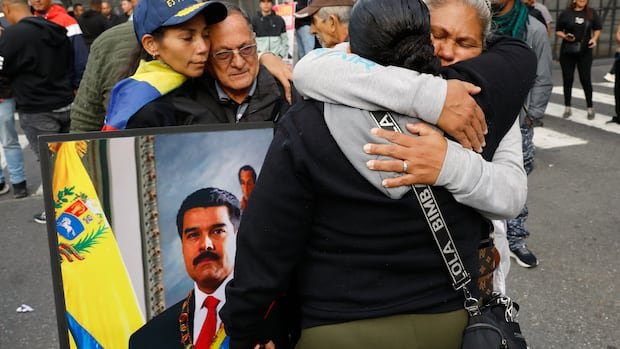
Armed individuals and uniformed members of a civilian militia took to the streets of a Caracas neighbourhood long considered a stronghold of the ruling party. But in other areas of the city, the streets remained empty hours after the attack. Parts of the city remained without power, but vehicles moved freely.
Video obtained from Caracas and an unidentified coastal city showed tracers and smoke clouding the landscape as repeated muted explosions illuminated the night sky. Other footage showed an urban landscape with cars passing on a highway as blasts illuminated the hills behind them. Unintelligible conversation could be heard in the background. The videos were verified by The Associated Press.
Smoke could be seen rising from the hangar of a military base in Caracas, while another military installation in the capital was without power.

“The whole ground shook. This is horrible. We heard explosions and planes,” said Carmen Hidalgo, a 21-year-old office worker, her voice trembling. She was walking briskly with two relatives, returning from a birthday party. “We felt like the air was hitting us.”
Venezuela’s government responded to the attack with a call to action. “People to the streets!” it said in a statement. “The Bolivarian Government calls on all social and political forces in the country to activate mobilization plans and repudiate this imperialist attack.”
The statement added that Maduro had “ordered all national defence plans to be implemented” and declared “a state of external disturbance.” That state of emergency gives him the power to suspend people’s rights and expand the role of the armed forces.
The website of the U.S. Embassy in Venezuela, a post that has been closed since 2019, issued a warning to American citizens in the country, saying it was “aware of reports of explosions in and around Caracas.”
“U.S. citizens in Venezuela should shelter in place,” the warning said.
With Venezuelans themselves nervously wondering what would come next, Interior Minister Diosdado Cabello appeared on state TV on a street wearing a helmet and flak jacket, urging people not to co-operate with the “terrorist enemy.”
Inquiries to the Pentagon and U.S. Southern Command since Trump’s social media post went unanswered.
The FAA warned all commercial and private U.S. pilots that the airspace over Venezuela and the small island nation of Curacao, just off the coast of the country to the north, was off limits “due to safety-of-flight risks associated with ongoing military activity.”

Roxanna Vigil, an international affairs fellow at the Council on Foreign Relations, says she has concerns about what comes next in Venezuela after the U.S. captured President Nicolás Maduro and his wife, Cilia Flores, early Saturday. Vigil says it will take years to reverse the long decline of Venezuela’s oil sector and that it’s not clear how the Trump administration intends to move forward.
Reactions swift, some damning
Lee, a Republican senator from Utah, posted his potential concerns, reflecting a view from the right flank in the U.S. Congress. “I look forward to learning what, if anything, might constitutionally justify this action in the absence of a declaration of war or authorization for the use of military force,” he said on X.
He’s since softened his stance, following a conversation with Rubio. “The action likely falls within the president’s inherent authority,” Lee wrote.
It was not clear if the U.S. Congress had been officially notified of the strikes.
Lawmakers from both political parties in Congress have raised deep reservations and flat-out objections to the U.S. attacks on boats suspected of drug smuggling near the Venezuelan coast, and Congress has not specifically approved an authorization for the use of military force for such operations in the region.
Cuba, however, a supporter of the Maduro government and a longtime adversary of the U.S., called for the international community to respond to what President Miguel Díaz-Canel called “the criminal attack.”
“Our zone of peace is being brutally assaulted,” he said on X.
Russia was quick to condemn the U.S.’s actions, calling them “concerning” and “condemnable.”
“In the current situation, it is important, first and foremost, to prevent further escalation and to focus on finding a way out of the situation through dialogue,” Russia’s Foreign Affairs Ministry said, adding that the United Nations Security Council should convene immediately.
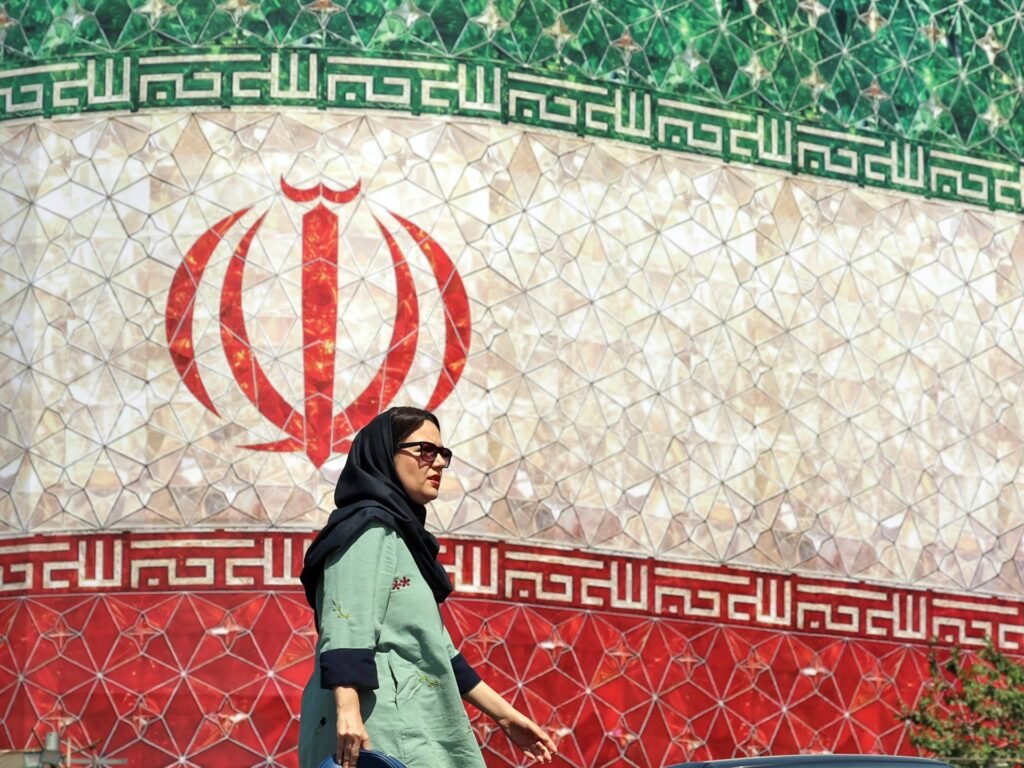
Iran’s Foreign Affairs Ministry also condemned the strikes.
President Javier Milei of Argentina praised the claim by his close ally, Trump, that Maduro had been captured with a political slogan he often deploys to celebrate right-wing advances: “Long live freedom, dammit!”
Brazilian President Luiz Inácio Lula da Silva strongly condemned the U.S. military attack on his neighbour, saying Maduro’s capture represents “an unacceptable line.”
“These acts represent a grave affront to Venezuela’s sovereignty and yet another extremely dangerous precedent for the entire international community,” Lula said in a post on X.
Meanwhile, the Venezuelan opposition, headed by recent Nobel Peace Prize winner Maria Corina Machado, said in a statement on X that it had no official comment on the events. It said Maduro has repeatedly cheated it of power in elections, as well as crushing street protests and jailing opposition figures.
World monitoring situation closely
The European Union has repeatedly said Maduro “lacks legitimacy,” the bloc’s top diplomat, Kaja Kallas, said on Saturday, adding that she called for restraint and respect for international law regarding the situation.
“The EU has … defended a peaceful transition. Under all circumstances, the principles of international law and the UN Charter must be respected. We call for restraint,” Kallas said on X, adding she’s spoken with Rubio.
Several additional world leaders, including from Italy, Belgium, Indonesia and Germany, confirmed they’re monitoring the situation on the ground and in touch with relevant embassies.
Foreign Affairs Minister Anita Anand posted a statement on social media saying Canada has “refused to recognize any legitimacy of the Maduro regime” since 2019, when Ottawa first closed its embassy in Venezuela. She cited the regime’s repression of its own citizens, including dissenters.
“Canada calls on all parties to respect international law and democracy,” Anand wrote. “Canada is engaging with its international partners and monitoring developments closely.”
The U.S. military has been attacking boats in the Caribbean Sea and the eastern Pacific Ocean since early September. As of Friday, the number of known boat strikes is 35 and the number of people killed is at least 115, according to numbers announced by the Trump administration.
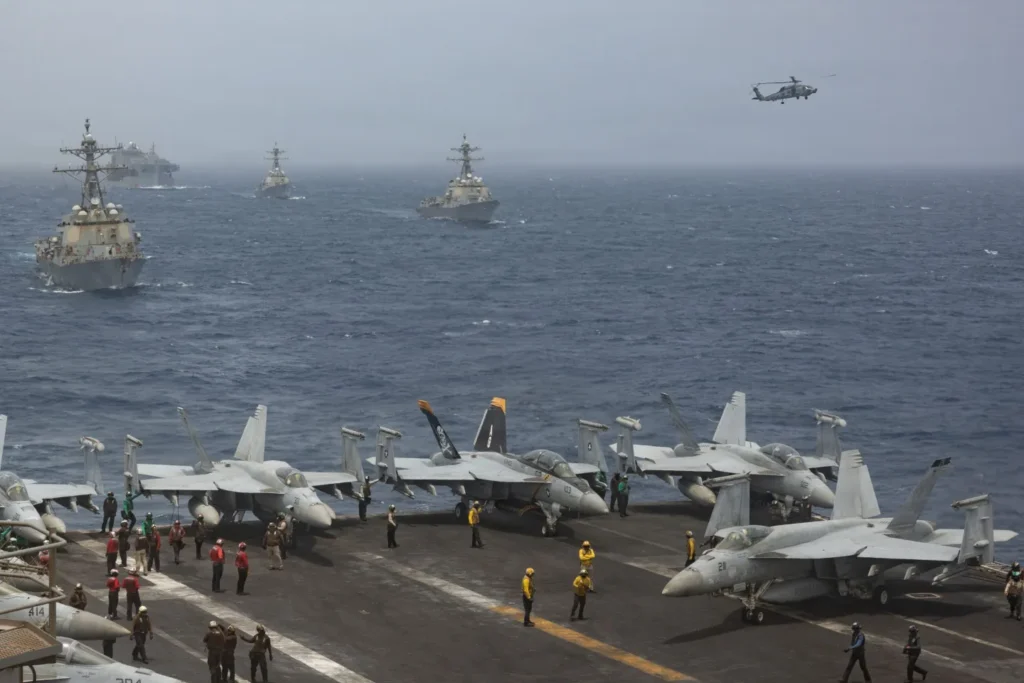
They followed a major buildup of U.S. forces in the waters off South America, including the arrival in November of the nation’s most advanced aircraft carrier, which added thousands more troops to what was already the largest military presence in the region in generations.
Trump has justified the boat strikes as a necessary escalation to stem the flow of drugs into the U.S. and asserted that the U.S. is engaged in an “armed conflict” with drug cartels.
Action recalls past U.S. interventions
While various Latin American governments oppose Maduro and say he stole the 2024 vote, direct U.S. action revives painful memories of past interventions and is generally strongly opposed by governments and populations in the region.
Trump’s action recalls the Monroe Doctrine, set out in 1823 by then-president James Monroe, laying U.S. claim to influence in the region, as well as the “gunboat diplomacy” seen under Theodore Roosevelt in the early 1900s.
The U.S. has not made such a direct intervention in its backyard region since the invasion of Panama 37 years ago to depose military leader Manuel Noriega over similar allegations to those directed against Maduro.
In the Panama case, Noriega ended up in prison for 20 years.
Source link