The United Arab Emirates said Monday it came under attack by Iran for the first time since a fragile ceasefire in the Mideast war took hold early April. The attacks appeared to be in response to U.S. President Donald Trump’s latest efforts to reopen the Strait of Hormuz, a critical waterway for global energy.
The U.S. military meanwhile said it sank six small boats from Iran as it moved to reopen the Strait of Hormuz.
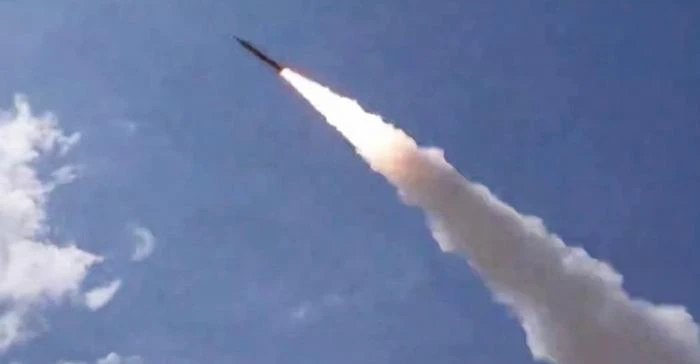
The U.A.E. Defence Ministry said Iran launched four cruise missiles, with three shot down and one falling into the sea, while in the eastern emirate of Fujairah authorities said an Iranian drone sparked a fire at a key oil facility. The British military reported two cargo vessels ablaze off the U.A.E.
Three Indian citizens were injured at the Fujairah Oil Industry Zone and taken to hospital, according to the Fujairah media office.
Civil defence teams were deployed immediately to contain the blaze, it said in a statement.
Prime Ministers Mark Carney wrote on social media that Canada “strongly condemns Iran’s unprovoked missile and drone attacks on the United Arab Emirates.” He said Canada stands with President Mohamed Bin Zayed and the people of the United Arab Emirates, and reiterated the call for “de-escalation and diplomacy in the region.”
British Prime Minister Keir Starmer echoed the message.
The attacks came after the U.S. military said two American-flagged merchant ships had successfully transited the strait after it launched a new initiative to restore traffic Monday.
But Iran’s Revolutionary Guard Corps denied that any commercial vessels or tankers had crossed the strait in the last few hours, saying via the Tasnim news agency that such “claims by U.S. officials are baseless and complete lies.”
Iran’s Foreign Minister Abbas Aragchi said events in the Strait of Hormuz showed there was no military solution to the crisis, adding that talks were making progress with Pakistan’s mediation while warning the United States and the United Arab Emirates against being drawn into a “quagmire by ill-wishers.”

The U.S. and Iran tried to assert control in the Strait of Hormuz on Monday with both countries launching attacks, but neither declaring an end to the ceasefire.
Iran has effectively controlled the strait since the U.S. and Israel launched the war in late February. Breaking Iran’s chokehold would ease global economic concerns and deny Tehran a major source of leverage in talks aimed at ending the war. But such efforts also risk reigniting full-scale fighting.
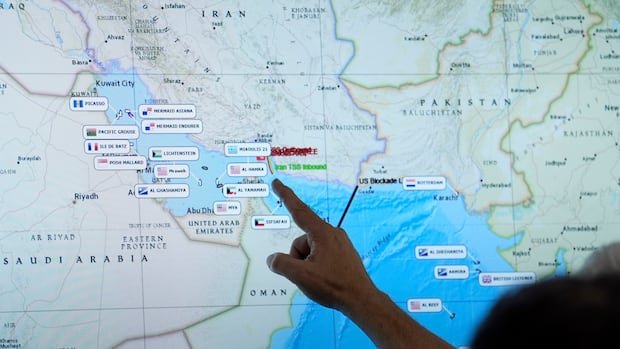
Iran’s effective closure of the strait, which runs between Iran and Oman, has caused a spike in worldwide fuel prices and rattled the global economy. The U.S.-led Joint Maritime Information Center is now advising ships to cross the strait through the “enhanced security area” in Oman’s waters.
Reports of new attacks raised doubts as to whether shipping companies, and their insurers, will feel comfortable taking the risk given that Iran has fired on ships in the waterway and vowed to keep doing so. Iran has said the new U.S. effort is a violation of the fragile ceasefire that has held for more than three weeks.
Earlier Monday, the U.A.E. also accused Iran of attacking an empty crude oil tanker belonging to the Abu Dhabi state oil firm ADNOC with drones as it attempted to pass through the strait.
Free of mines, U.S. says
Admiral Brad Cooper, commander of U.S. Central Command, told reporters that American forces have successfully opened a passage through the strait that is free of Iranian mines. He said Iran had launched multiple cruise missiles, drones and small boats at civilian ships under the U.S. military’s protection.
U.S. military helicopters sank six of the small boats, Cooper said, adding that “each and every” threat had been defeated.
“The U.S. commanders who are on the scene have all the authority necessary to defend their unit and to defend commercial shipping — as we saw and demonstrated earlier today,” Cooper said.
U.S. War Secretary Pete Hegseth was expected to give a briefing on operations in the region Tuesday morning at the Pentagon with Air Force Gen. Dan Caine, chair of the Joint Chiefs of Staff.
Trump had warned Sunday that Iranian efforts to halt passage through the strait “will, unfortunately, have to be dealt with forcefully.”

Joe Sestak, a former deputy chief of U.S. naval operations, says ships stuck in the Strait of Hormuz will likely be reluctant to take up U.S. President Donald Trump’s offer to guide them out because of the uncertainty around the U.S. plan and Iran’s ability to continue to restrict traffic through the strait.
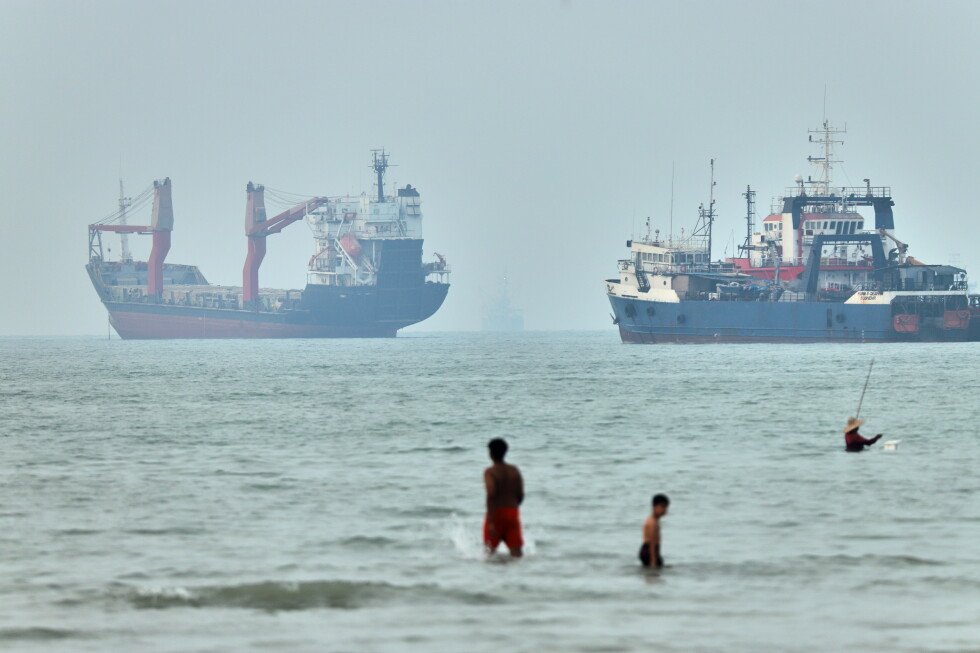
He described the effort to reopen the strait in humanitarian terms, designed to aid stranded seafarers on hundreds of ships that have been stuck in the Persian Gulf since the war began. Crews have described to The Associated Press seeing drones and missiles explode over the waters earlier in the war as their vessels run low on drinking water, food and other supplies.
Iran’s state-run IRNA news agency called the effort part of Trump’s “delirium.”
Transit not possible, group says
The Joint Maritime Information Center, led by U.S. maritime forces based in Bahrain, told operators in a note that the U.S. had “established an enhanced security area to support Strait of Hormuz transits.”
It advised vessels to use Omani waters on the west of the strait to avoid mines, urging them to “carefully review risk assessments and routing ahead of transit.”
Hundreds of commercial vessels and as many as 20,000 seafarers have been unable to transit the strait during the conflict, the International Maritime Organization says.
The container shipping group Hapag-Lloyd said on Monday that it considered that transit through the strait was still not possible.
Shipping and oil executives have said they need an agreed and full end to hostilities because military convoys alone are not enough to allow normal traffic to resume safely.

Get the latest on CBCNews.ca, the CBC News App, and CBC News Network for breaking news and analysis
Meanwhile, Pakistan said the U.S. has handed over 22 crew members from an Iranian container vessel that it seized last month.
Pakistan, which has been trying to broker a peace deal, described the move as a “confidence-building measure.”
The U.S. and Israel suspended their bombing campaign against Iran four weeks ago, and U.S. and Iranian officials held one round of talks. But attempts to set up further meetings have so far failed.
Source link