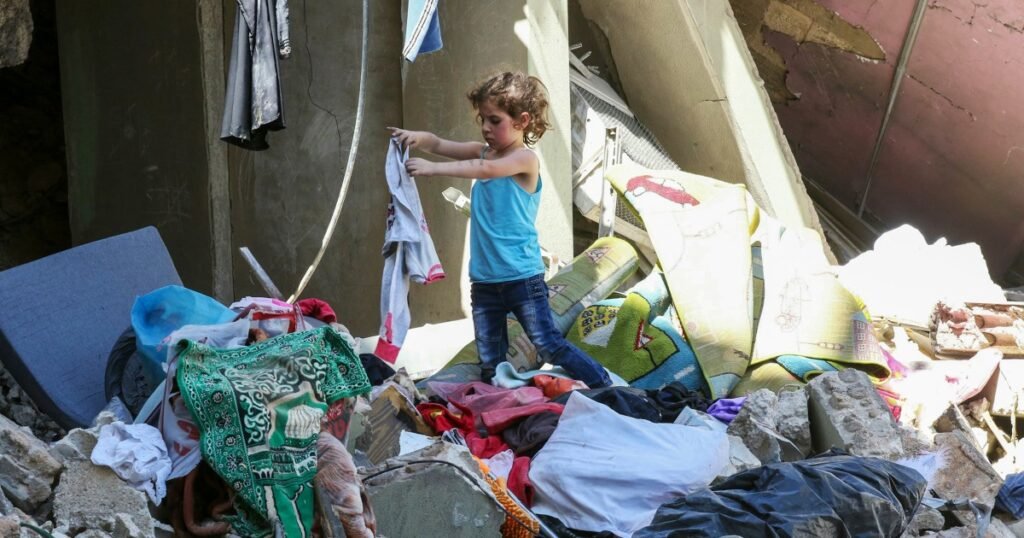
In Lebanon, Israel said it targeted Hezbollah across the south of the country overnight and early Friday. Israeli airstrikes had killed at least 47 people in Lebanon since midnight, the country’s health ministry reported.
The Israeli military said that four of its soldiers were killed, including a senior commander, and another five injured. Hezbollah also reported fighting in the area.
Earlier, Netanyahu said he instructed the military to strike Hezbollah “with force” following the deaths of the soldiers, which he called “a blatant violation of the ceasefire.”
Israel will remain in the security zone in southern Lebanon for as long as necessary to protect its northern communities, he added. The Israeli military said later Friday that it had conducted more than 150 strikes in Lebanon since midnight, and its spokesperson Effie Defrin said the Israeli forces on the ground have “full operational freedom.”
Hezbollah accused Israel of never adhering to a ceasefire or the deal that Trump signed, which called for the immediate end of all fighting, including in Lebanon, where a number of agreements between Israel and Lebanon’s government have failed to halt strikes.
Iran has warned that it would not abide by the agreement with the United States if Israel, which has not been part of talks and did not sign the deal, continues its campaign in Lebanon.
Ebrahim Rezaei, a spokesperson for Iran’s national security commission, said Friday that Iran must not allow “the resistant people of southern Lebanon to be massacred.” Meanwhile, Iran’s army warned that it had its hand “on the trigger” and was ready “in the event of any enemy breach of commitments.”
On Thursday, Israel published a map with an expanded military control zone in southern Lebanon and said it would not rule out more attacks beyond it.
The 14-point memorandum of understanding agreed to by the U.S. and Iran calls for an immediate end to “military operations on all fronts, including in Lebanon,” as well as “ensuring the territorial integrity and sovereignty of Lebanon.”
The pact also stipulates that the key Strait of Hormuz trading route will be reopened after months of disruption for the global economy, but particularly oil and gas markets.
Brent crude steadied Friday but remained set for a more than 8% weekly decline given news of the deal.
An NBC News analysis of marine traffic through the crucial waterway revealed a trickle of ships traveling through the strait Thursday and into Friday, as two Chinese and two Hong Kong-owned ships, and a Japanese crude oil tanker, left the Persian Gulf, where they had been stuck since February.
The authority Iran has established to manage the strait issued new guidelines for vessels Friday, saying it won’t be charging any fees during the 60-day negotiation process, but a transit request must be submitted 48 hours before arrival. Iran would waive “tariffs for security, safety and environmental services” during the period, the Persian Gulf Strait Authority said in an advisory.
Source link