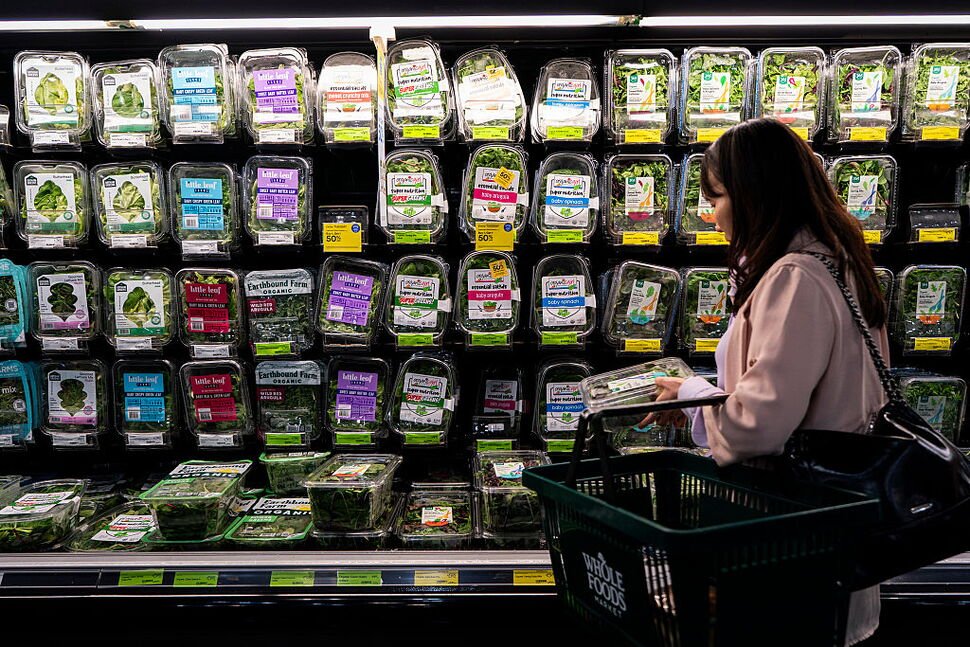
The federal government may be in the process of learning that it’s hard to control what you choose not to observe. In this case it’s cyclospora, a parasite that can infect humans and cause what the Centers for Disease Control and Prevention refers to as “explosive bowel movements.”
Make Your Inbox Smarter
Sign up for these free email newsletters from U.S. News:
Pick Newsletters
The CDC says it knows of 843 cases of cyclosporiasis across 31 states.
But a look at data collected by state shows that’s a significant undercount.
Public health officials find themselves grappling with a seasonal emergency while armed with fragmented data and a hard-to-pin-down source for the outbreaks. (It is often difficult to establish the source of food poisoning. Federal officials are looking at the supply chains for white and green onions, cucumbers and cilantro.)
Meanwhile, you are told to manage a disease that can cause weeks of unpleasantness with advice you probably first learned before you set foot in kindergarten: Wash your hands.
That’s good advice, mind you. Cyclosporiasis spreads when people consume food or drink that’s been contaminated with feces. So wash your fruit and veggies carefully, too.
By the Numbers
As of Monday morning, Michigan had 2,640 reported cases, including 44 hospitalizations.
As of July 2, the Ohio Department of Health was reporting 177 cases in 2026, 171 of them since June, and 28 hospitalizations. As of late last week, The Associated Press reported northwestern Ohio had seen more than 500 cases.
New York State? At least 112 cases outside of New York City.
CDC says it’s aware of 1,500 potential cases that authorities are working to confirm as domestically acquired cyclosporiasis.
Who’s getting sick? The agency says the age range is 5 to 88, with a median age of 44. Fifty-nine percent were female. There have been no reported deaths. The CDC also says it factors in a six-week lag between onset of symptoms and report to the agency.
How are they being treated? Cyclosporiasis calls for antibiotics as well as copious fluids to avoid dehydration.
A Pivotal Decision
Part of the feds’ problem stems from the fact that in July 2025, the CDC scaled back its primary foodborne tracking system, the Foodborne Diseases Active Surveillance Network (aka FoodNet), citing budget constraints. Monitoring cyclospora became voluntary.
That’s made it harder for CDC to keep up with current outbreak data.
Because cyclospora cannot be grown in a lab and requires quick and comprehensive cooperation across state lines to determine the point of origin, that decision has also made it harder to find the source of the food contamination.
Past outbreaks in the U.S. and Canada have been connected to bagged salad mixes and kits, fresh cilantro, fresh basil, raspberries, snow peas and green onions.
How Should Consumers Respond
So what can you do? Let’s take the Michigan Department of Health and Human Services as an example of the guidelines.
“Entities in Southeast Michigan who are preparing, processing, or serving raw produce, including restaurants and other commercial kitchens,” should take a number of steps, MDHHS says.
- For lettuce/leafy greens: Buy whole heads of lettuce, not bagged lettuce or salad “kits.” Throw out the outer 2-3 layers and wash the inner leaves under running water. Cooking leafy greens is the best option.
- Cilantro and basil: Separate the leaves, wash under running water. Safest when cooked.
- Green onions: Trim the root end and remove the outer layer, wash thoroughly under running water. Safest when cooked.
- Raspberries: MDHHS says “their bumpy surface makes them especially hard to clean; the parasite can hide in the tiny crevices.” Yikes. Safest when cooked. Frozen berries are less likely to have parasites.
- Snow peas: Wash under running water, rubbing the surface. Safest when cooked.
There’s an old adage that government is forever fighting the last war. Public health officials are at something of a decision point. They can live with delayed federal tallies and wash-your-vegetables warnings that may or may not change American behaviors.
Or they can restore systems to catch foodborne parasites before they reach the dinner table.
For now, the American salad bowl is a bit of a gamble.
Source link