Published on
March 7, 2026

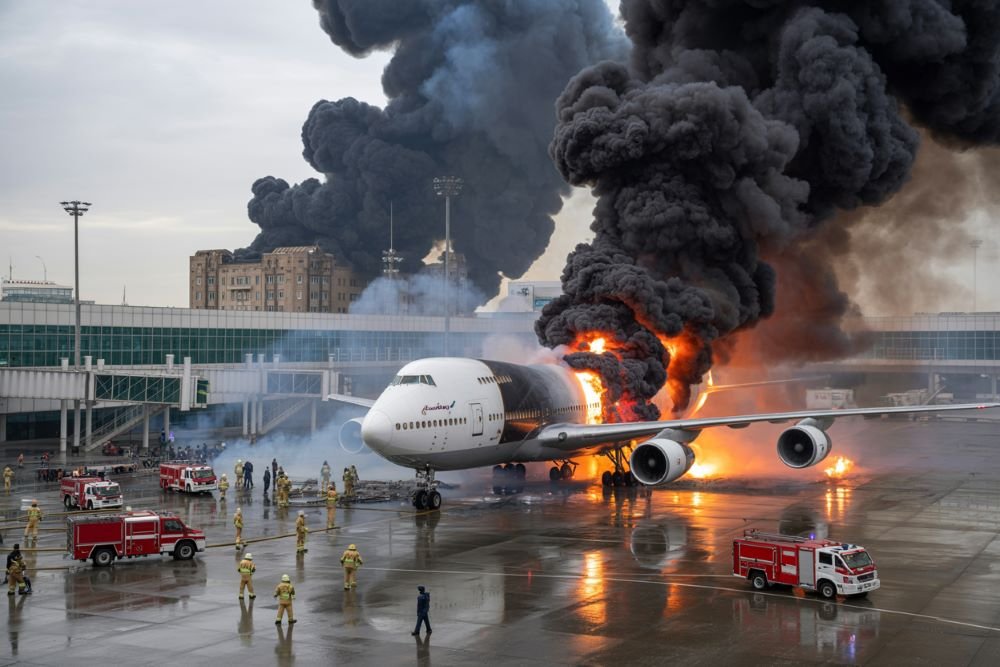
Image generated with Ai
The escalating U.S.-Israel military campaign has hit a new high as Tehran’s Mehrabad International Airport has been struck by a series of powerful airstrikes. The once-bustling airport, a crucial hub in the region, is now left in ruins, with a Boeing 747 aircraft seen engulfed in flames on the tarmac. These shocking developments are part of a broader conflict involving the United States and Israel, which has brought unprecedented danger to civilians and travelers in Iran. With ongoing attacks on strategic infrastructure, Iran’s capital is now at the heart of a volatile situation, leaving travelers and aviation experts alarmed.
Mehrabad Airport in Chaos: Boeing 747 Struck During Airstrikes
In an unprecedented strike, Mehrabad International Airport was hit by multiple bombings early on March 7, 2026, causing severe damage to the airport infrastructure. One of the most shocking images emerging from the chaos shows a Boeing 747 aircraft ablaze on the tarmac. Videos from social media show the aircraft in flames, and while the specific airline is not yet confirmed, it is widely believed to belong to one of Iran’s key national carriers, Mahan Air or Iran Air.
The fire and explosions have grounded all flights, causing widespread disruption to air travel. Airports across the region, including Dubai International and Saudi Arabian hubs, have faced severe delays and cancellations due to the ongoing conflict.
Airstrikes Target Iran’s Critical Infrastructure: Airports, Military Sites Hit
The strikes on Tehran are not isolated. Over 80 fighter jets from the Israeli Defense Forces (IDF) participated in these bombings, targeting not only Mehrabad Airport but also underground ballistic missile factories and military academies linked to the Islamic Revolutionary Guard Corps (IRGC). The damage to Mehrabad signifies a broader strategy to cripple Iranian infrastructure, including key military and civilian hubs.
Iran’s government has not yet confirmed the total extent of the damage to the airport or civilian casualties, but video footage confirms that the destruction at Mehrabad is severe, with blazing fires visible in several parts of the terminal.
The Boeing 747 Disaster: Was the Aircraft in Active Service?
One of the most tragic visuals from the attack is the Boeing 747 engulfed in flames. Though details remain unclear, eyewitnesses and video evidence point to this being a commercial aircraft, possibly operated by Mahan Air or Iran Air, both of which are known to use Boeing 747s for long-haul flights.
While it has yet to be confirmed whether the plane was actively carrying passengers, the destruction of such a large aircraft on the runway is a grim reminder of the high stakes in this ongoing conflict. The risk to commercial aviation is evident, with Tehran’s airports now seen as highly unsafe for travel.
Travel Warnings Go into Overdrive: Major Aviation Disruptions
As the U.S.-Israel military operation continues, global travel authorities have issued urgent travel advisories for Iran and surrounding regions.
The U.S. Department of State has elevated its travel warning to the highest level: Level 4 – Do Not Travel, urging American citizens to immediately leave Iran due to the rapidly escalating conflict and the dangers posed to civil aviation. The UK Foreign Office and other European governments have followed suit, advising nationals to avoid non-essential travel to Iran.
With Mehrabad International Airport now closed, and the broader Iranian airspace compromised, air travel into and out of Iran is facing widespread cancellations and re-routed flights.
Middle East in Crisis: Impact Beyond Iran’s Borders
The ripple effects of the U.S.-Israel strikes have already been felt across the region. Airports like Dubai International (DXB) and Abu Dhabi have faced temporary flight suspensions and delays due to missile and drone threats intercepted by air defense systems. Countries like Saudi Arabia, Qatar, and the UAE have scrambled to secure their airspaces and critical infrastructure from incoming missiles.
The risk to travelers extends far beyond Iran, with international airports now on high alert. Travelers are urged to reconsider their itineraries and avoid connecting flights through the region if possible.
Advertisement
Advertisement
Iran Responds with Retaliatory Attacks: The Middle East Feels the Heat
Iran has responded to the Israeli airstrikes with a devastating retaliatory missile and drone campaign. The Khorramshahr-4 ballistic missiles launched by Iran targeted Tel Aviv and U.S. military assets in the Gulf. These missile strikes are likely to continue escalating the situation, increasing the risk of collateral damage to civilian targets.
The retaliation is expected to lead to further disruptions to air travel, particularly in regions close to Iran’s missile range, such as the Gulf States and Israel.
What Travelers Need to Know: Avoid Travel to Iran, Evacuations Underway
As the situation in Tehran and surrounding regions remains tense, foreign nationals are urged to depart Iran immediately if they are currently in the country. Evacuations are being coordinated through charter flights and other emergency arrangements, with many countries organizing temporary evacuation routes.
For those with travel plans to the region, it is crucial to stay updated on official government advisories and avoid entering areas under active military conflict. Travel agencies and airlines have suspended flights to Iran, and land borders are also closed due to military action.
Advertisement
Advertisement
Conclusion: Travel in the Middle East Remains Extremely Dangerous
With Tehran’s Mehrabad International Airport now a battlefield, U.S.-Israel airstrikes have brought the conflict to a new height, threatening both civilian lives and travel operations. Travelers are strongly urged to avoid Iran and its airspace due to the ongoing strikes and security risks.
For up-to-date travel information, refer to official government websites such as the U.S. Department of State and UK Foreign Office, and ensure that emergency evacuation plans are in place for those already in the region.

Source link