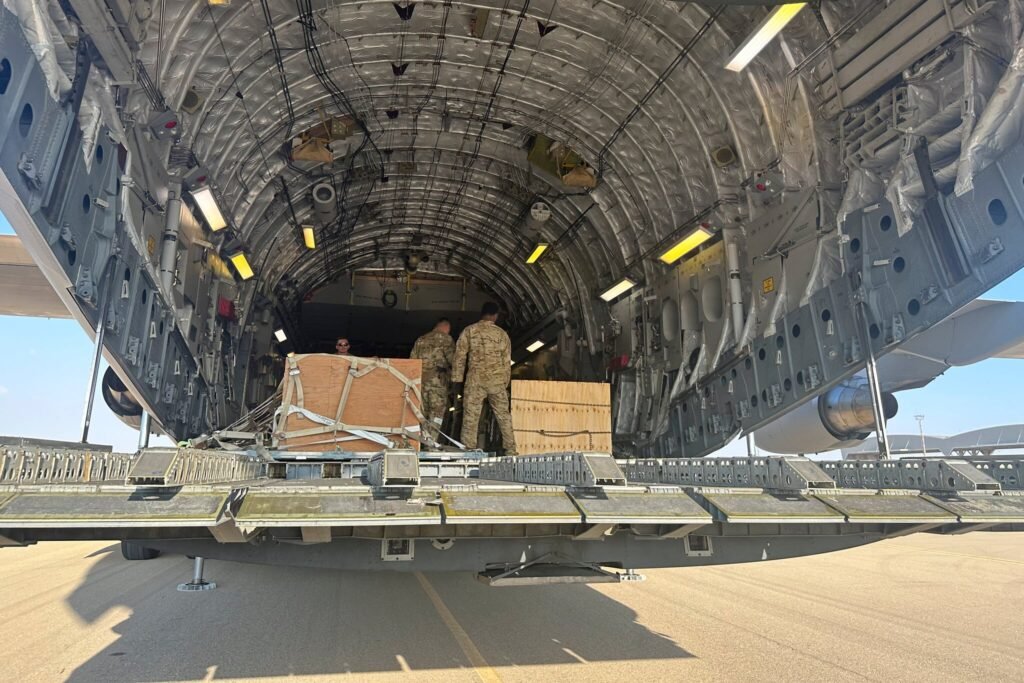
Israel’s battle against Hamas in Gaza over the past two years was waged with extensive military support from the country’s closest ally, the United States.
Since the Hamas-led invasion and massacre that sparked the war, Washington has supplied Israel with an estimated $16-22 billion in military assistance. That wartime support supplemented the $3.8 billion the US sends Israel in defense aid annually, together reinforcing the strength of the military alliance.
But while largely appreciated in Jerusalem, the heavy reliance on foreign assistance has also raised concerns in Israel about the downsides of the aid, including the level of control it gives the US over Israel’s military spending and priorities.
With the agreement underpinning the annual aid disbursement set to expire in the coming years, the White House occupied by a president who has sought to reduce handouts to foreign allies, and restrictions on arms sales during the war with Hamas a fresh and painful memory, Prime Minister Benjamin Netanyahu has signaled that Jerusalem will phase out its dependence on US military assistance.
The shift could help recalibrate the US-Israel relationship and address those downsides, but analysts warn it could also carry deep knock-on effects domestically and on the international stage, depleting Israeli coffers and boosting hostile elements.
Phasing out aid would represent “a much deeper decline of US influence in the Middle East,” warned former US ambassador to Israel Dan Shapiro, adding that it risks weakening US-Israel military ties and calling for careful consideration of a potentially destabilizing move.
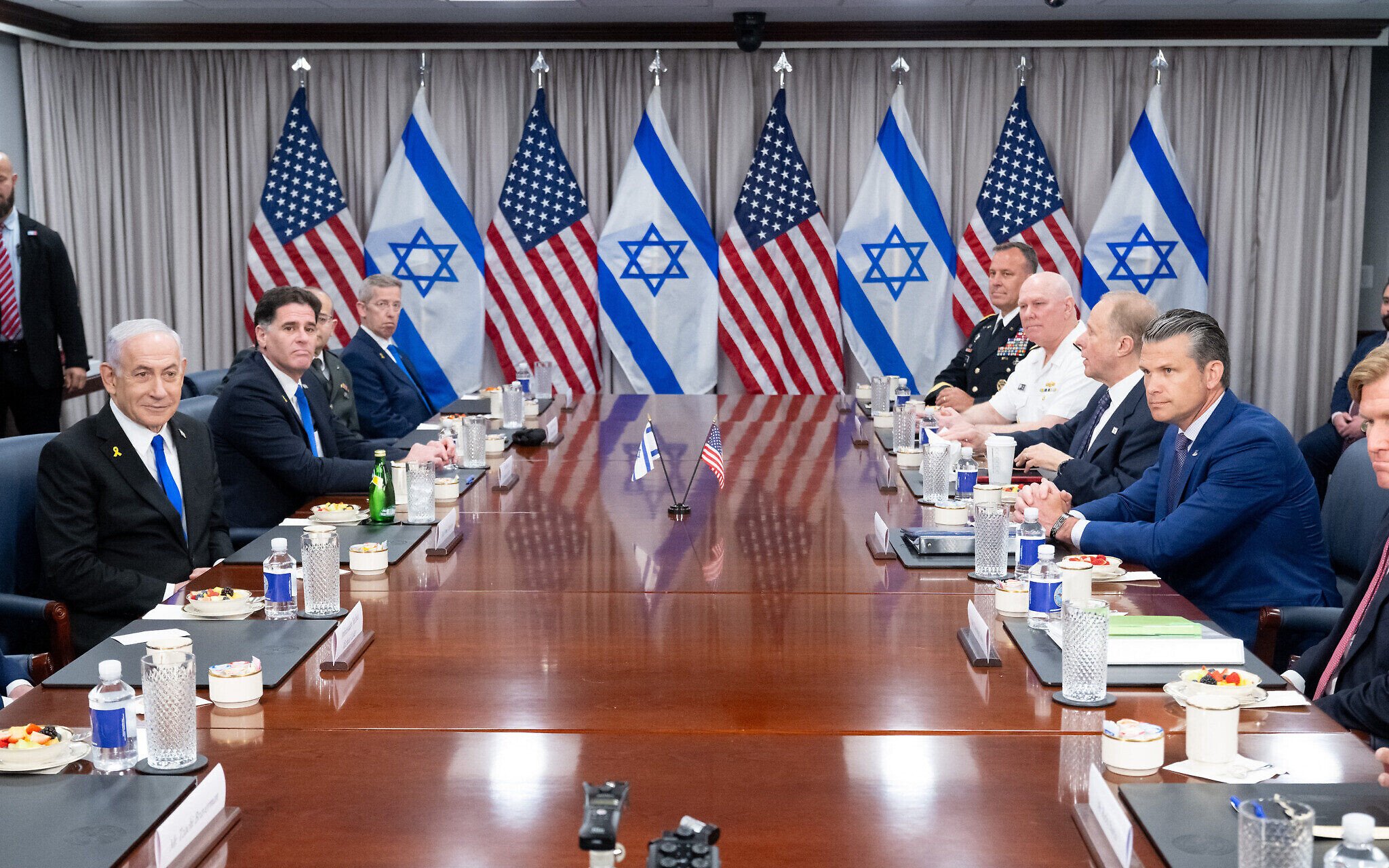
While the move carries considerable risk, Israel has survived without US aid before. It fought in 1967 without US weapons, and has found ways to cope with restrictions even since aid was ramped up. After the US restricted the use of American cluster bombs during the 2006 Lebanon War, Israel developed its own improved version.
For Jerusalem, the challenge of weaning off Washington’s assistance will be to preserve cooperation while reducing unwanted control.
If done carefully, Israel has much to gain by moving “from a recipient status to a partner status with the United States,” said former Israeli envoy to the US Michael Oren.
‘Maximal independence’
Speaking to The Economist in an interview published last month, Netanyahu declared that he wanted to “taper off” military aid to zero over the next 10 years. Days later, he said in a Hebrew-language press conference that he was seeking “maximal independence” from foreign military aid “so we don’t run out of weapons or ammunition.”
In the press conference, Netanyahu leveled an incendiary accusation against the former US president Joe Biden’s administration, saying that Israeli soldiers lost their lives in Gaza because of an “embargo” that he alleged caused the IDF to run out of ammunition. That policy only ended, he said, when US President Donald Trump took office.
The premier has repeatedly accused the Biden administration of limiting arms supplies to Israel, notably in June 2024. President Joe Biden has denied withholding arms apart from a batch of 2,000-pound “bunker buster” bombs, over concerns about their potential use in southern Gaza’s Rafah at that time.
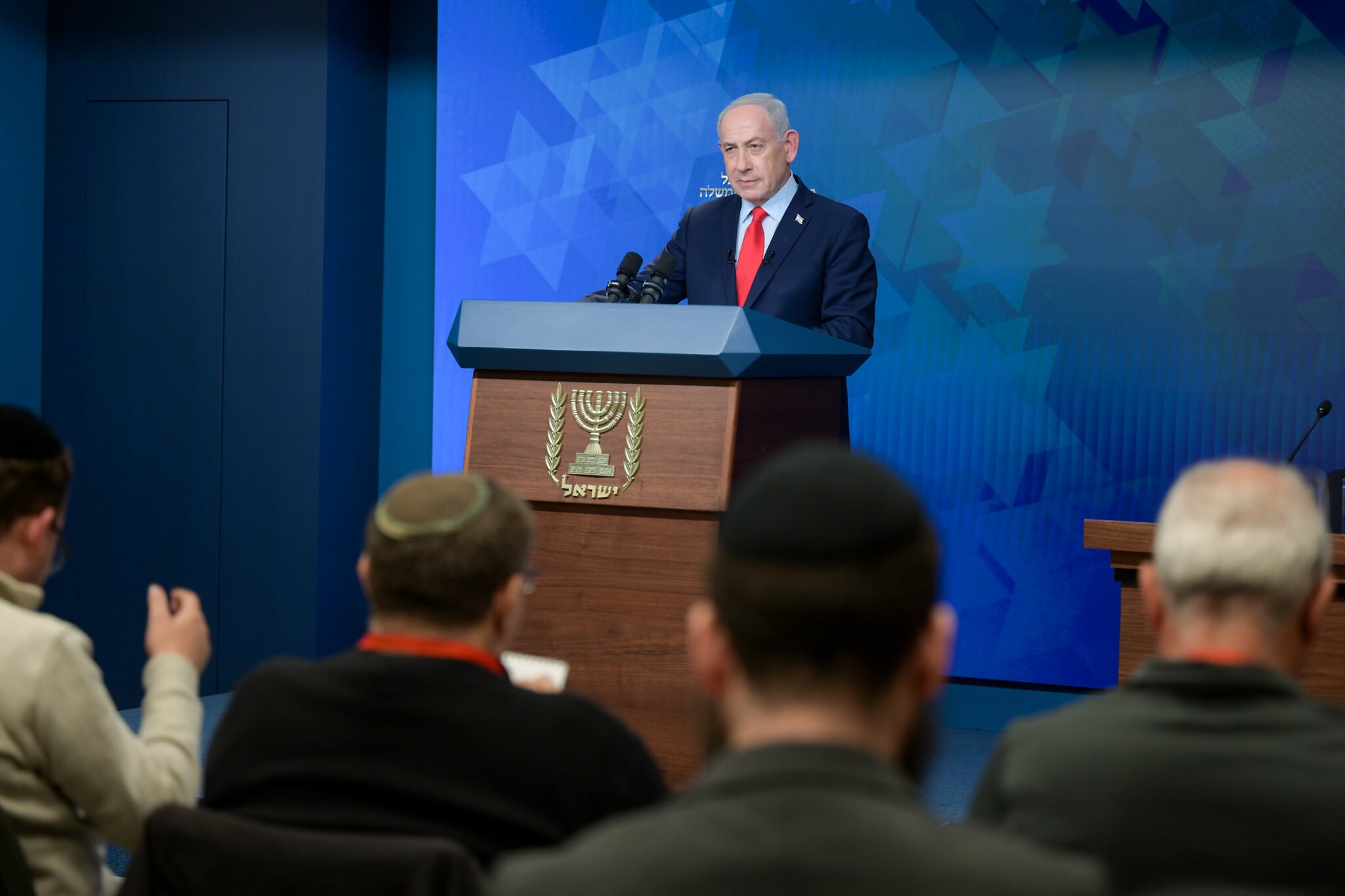
To prevent such instances from recurring, Netanyahu said he was prioritizing establishing a robust domestic Israeli arms manufacturing sector, aiming to shift the Israel-US relationship “from aid to partnership.”
This would be done, he said, through Israeli development and joint production, and such a partnership could extend to other allies, including India and Germany.
Gil Pinchas, who stepped down last month as chief financial adviser to the Israel Defense Forces and Defense Ministry, told the Financial Times before leaving his position that Israel would seek to prioritize joint military and defense projects over cash handouts in talks with the Trump administration on a new memorandum of understanding, or MOU, which he expected to take place in the coming weeks.
The last MOU, a 10-year deal signed in 2016 that went into effect two years later, granted Israel $3.8 billion per year in military aid, much of it to purchase US-made arms.
Pinchas called the annual aid “one component of the MOU [that] could decrease gradually.”
Double-edged aid
Annual US military aid to Jerusalem dates back to 1979, when Washington committed to providing billions in assistance to both Israel and Egypt as part of the US-brokered peace treaty between the countries.
While the aid once made up a significant chunk of Israel’s military spending, the percentage it makes up of the defense budget has significantly declined in recent years as Israel’s economy has flourished and its own defense spending has expanded. US aid currently makes up some 15-20 percent of Israel’s defense budget.
Shapiro, who helped negotiate the 2016 MOU as envoy under then-president Barack Obama, and is now a distinguished fellow at the Atlantic Council, said the agreement was built on a rigorous assessment of Israel’s threat environment and projected needs, as “there was a strong consensus between our two sides that we wanted to ensure Israel had adequate means to defend itself.”
Under the agreement, Israel receives $3.3 billion annually in Foreign Military Financing — US grants earmarked for buying American weapons — and a separate $500 million per year for missile-defense development and procurement, specifically the Iron Dome. The deal formalized missile defense funding for the first time, reducing yearly bargaining with Congress.
While the framework greatly assisted Israel in areas like missile defense, interoperability, and procurement, it also imposed some limitations.
Earlier MOUs allowed Israel to spend more than a quarter of the funds at home, helping nurture Israel’s defense manufacturing, but Obama chose to gradually eliminate this flexibility from 26% to 0% by the final year, so that by 2028, the assistance will be spent exclusively on US systems.
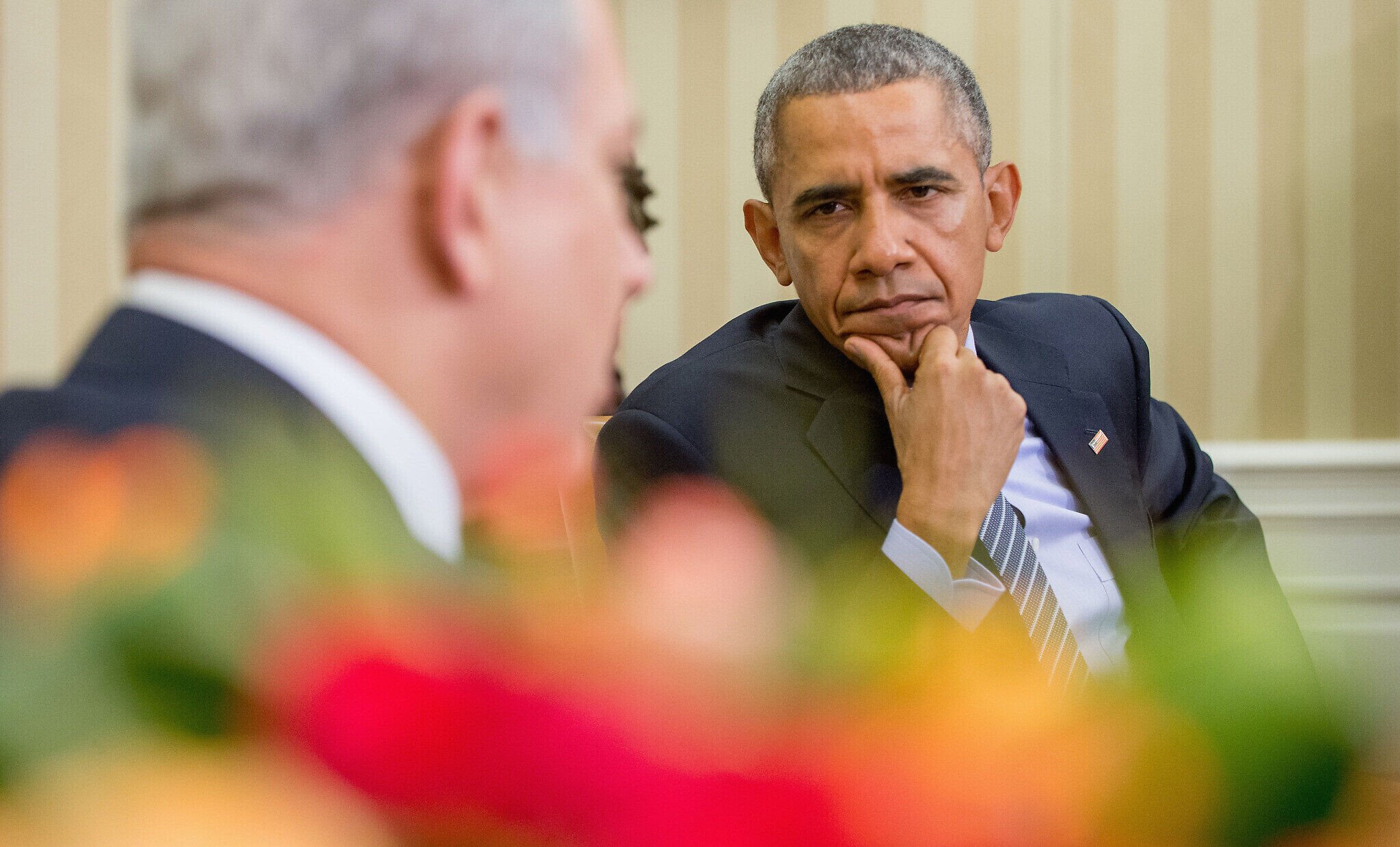
Oren, Israel’s ambassador to the US from 2009 to 2013, described the current aid framework as a liability for Israel, pointing to multiple cases over recent decades where Israel’s dependence on the US constrained military action, including when Obama delayed delivery of certain weapons during fighting in Gaza in 2014.
Oren said he warned Netanyahu at the time that this could happen again in a larger and higher-stakes conflict — as occurred two years ago under the Biden administration.
There are also more subtle setbacks for Israel in accepting hefty American aid.
Under Biden and Obama, dependence on American aid encouraged a shift toward defensive systems at the expense of conventional readiness for an offensive campaign — which is partly what caused the IDF to be less prepared for sustained ground combat when the 2023 Gaza war erupted, Oren argued.
Because those administrations preferred that Israel rely on defensive, rather than offensive, operations, US funding emphasized missile defense systems like Iron Dome, claimed the former envoy. “We were dependent on the aid, and the aid was geared to making us defensive, not offensive… This not just created leverage, it contributed to a change of our military culture, which was profound and immensely harmful.”
The aid [was] geared to making us defensive, not offensive…This not just created leverage, it contributed to a change of our military culture, which was profound and immensely harmful.
Oren encouraged Jerusalem to gradually phase out annual aid while preserving a close strategic partnership with the US, an option that could allow cooperation to flourish outside the military procurement sphere in areas like technology cooperation, intelligence sharing, and joint projects.
It would also free up Israel to procure weapons systems outside the US, fostering the expansion of multilateral ties and reducing its dependence on a single relationship.
That could help shift the current power dynamic, which has resulted in the US effectively wielding veto power over who Israel can make arms deals with.
In 2000, then-president Bill Clinton blocked a nearly $1 billion sale of Phalcon surveillance aircraft to Beijing. Four years later, president George W. Bush pressured Israel over plans to service Harpy drones previously sold to China.
As Israel moves to build up its own arms industry, it will rely on sales to foreign countries to fund the sector, with each of them a potential friction point with Washington, whether due to geopolitical issues or market competition. For Israel, ensuring that the US relationship survives those challenges may mean reducing the level to which that partnership is linked to military aid and procurement, though there could also be pitfalls in navigating those shifting ties.
Eran Lerman, vice president of the Jerusalem Institute for Strategy and Security and former deputy director of Israel’s National Security Council, encouraged shifting from an aid model to a deeper technological partnership, while reinforcing the US commitment to deterring dangerous actors.
The dynamic of the US being seen as Israel’s ATM helped promulgate a false perception of Israel as weak and fragile without the US. That means deterrence, a major part of Israel’s defense strategy in dealing with regional enemies, is put at risk any time support from Washington seems to waver, Lerman warned.
“The main difficulty inherent in [the MOU] lies in the image that has been created of one-sided dependence, when in practice Israel also contributes quite a bit to US security,” he said.
Going it alone
Even with its limitations on Israel, the current aid framework serves as a key stabilizer of procurement pipelines and US-Israel military integration. Without it, Israel could face new challenges in planning, budgeting, and financing arms procurements.
The US is likely to remain Israel’s main arms supplier, but, absent the funding guarantees of an MOU, Jerusalem will have a tougher time securing expensive, long-lead multi-year contracts.
Current contracting often relies on the assurance of future MOU funding even before Congress appropriates it, Shapiro explained; without such a framework, Israel will need new budgeting structures to reassure suppliers and sustain long-term agreements.
To many, Netanyahu’s call to decrease assistance is seen as an attempt to get in front of negative trends in US politics toward supplying the aid — from Democrats citing humanitarian concerns to a growing bloc of “America First” isolationists within the GOP.
Israel may diversify suppliers over time to avoid the effects of these trends, though Shapiro predicted that it would not be an immediate shift, especially for the Air Force, which would strongly prefer US systems for interoperability with Washington and coordination with CENTCOM.
The problem is that with or without the MOU, the US is always able to limit weapons sales.
Requests for Tomahawk missiles and strategic bombers have often been denied, and, even when Israel buys systems like the F-35, the IDF does not receive full access to their operating software.
“To the extent that one of the drivers of heightened skepticism about aiding Israel in the US is concerns about civilian casualties, humanitarian assistance, and those kinds of considerations — those also apply to sales of weapons, not only arms provided through assistance programs,” Shapiro said, noting that Congress can still attach conditions to assistance, review sales, and, although rarely put into practice, block sales or try to condition them.
Retired US Air Force Gen. Charles Wald, a former deputy head of US European Command, warned that Israel moving away from US aid could make it easier for Washington to restrict F-35 parts, air-to-air missiles, and other advanced munitions.
While Israel has the technology to produce these items domestically, it still lacks sufficient industrial production capacity to do so, said Wald, a distinguished fellow at the Jewish Institute for the National Security of America.
Cutting aid could also signal to members of Congress who are on the fence about supporting Israel that Jerusalem is “going it alone,” possibly reducing their support, the former general added.
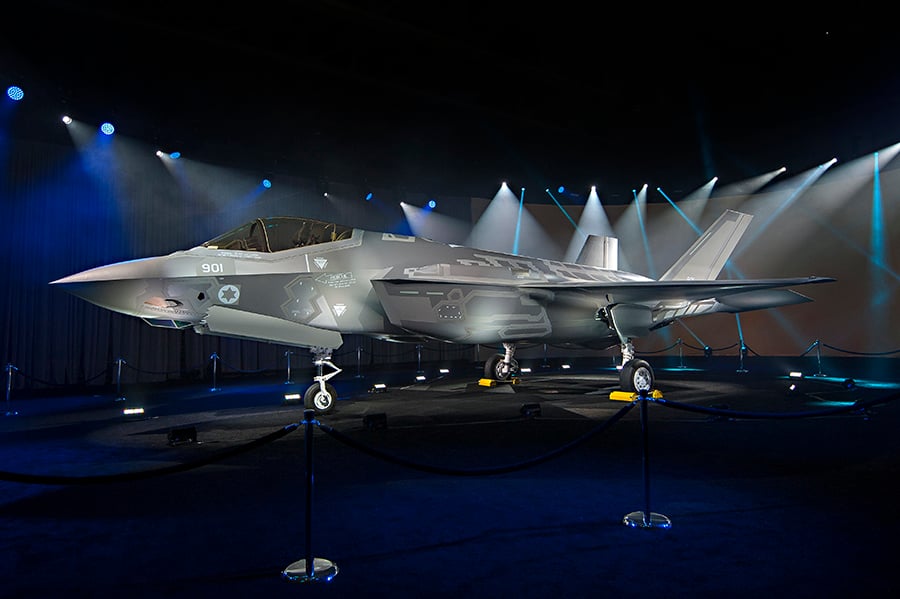
Israel flying F-35 fighter jets built by Lockheed Martin provides ‘billions of dollars in free advertisement.’
There is reason, however, to believe that arms sales would continue smoothly, thanks to the US interest in keeping its top Middle Eastern ally well-armed.
“The number one objective ought to be that Israel remains the superpower of the Middle East,” said Wald.
Defense firms are also eager to keep selling to Israel, noted Oren. Israel already jumps procurement lines for F-35 fighter jets because the IDF shows off how they can be used in actual combat, a trend likely to continue.
Israel flying F-35s built by Lockheed Martin provides “billions of dollars in free advertisement,” he said.
Risky ripples
While Israel is likely to try to preserve the $500 million for missile defense, replacing the remaining annual $3.3 billion — which at present amounts to about 0.6% of Israel’s GDP — would likely cause some domestic unrest in Israel as the government cut from other services to pay for the shortfall. The need to reduce funding for healthcare, social services, or other domestic priorities would spark a public debate about defense spending, but the economic impact would be manageable if done gradually, Lerman said.
The weaning would also carry other considerable potential downsides for both Israel and the US, including weakening regional deterrence or hurting Arab normalization.
A full phase-out weakens cooperation and interoperability, not just US leverage over Israel, said Shapiro, warning about “the second- and third-order effects of how that would affect US influence and ability to protect our interests in the region, and the openings it gives to our competitors.”
Phasing out aid “would almost certainly embolden Iran and its allies in the region if they perceive reduced US support,” Shapiro continued, adding that efforts to maintain or expand the moderate Abraham Accords normalization coalition could also be harmed, since many Arab states are incentivized to normalize ties with Israel to get closer to the US and improve CENTCOM cooperation.
What’s more, if the US stops aiding Israel, Congress may be unlikely to proceed with comparable aid to Egypt and Jordan, since those packages are linked to peace with Israel, Shapiro added, which may lead to additional adverse effects.
In the absence of sufficient US assistance programs, instability in Jordan can “spill over to the West Bank, to Syria, to Iraq,” he noted, adding that Egypt would “simply buy its weapons from Russia and China. It really opens the door to US competitors.”
Similar to Shapiro’s warning, Wald maintained that phasing out aid would weaken US influence and embolden adversaries, saying that, rather than retreat from Washington, the relationship should be strengthened, formalized, and ideally upgraded through a renewed MOU.
He proposed expanding joint weapons development, deepening tech cooperation, and writing stronger guarantees into the next agreement.
There are also ways to reinforce the military alliance outside a future MOU, like moving US aircraft from Qatar to Israel and basing more forces there to strengthen deterrence.
The countries could even move toward a formal defense treaty guaranteeing protection like NATO’s Article 5 — but noted that Israel has historically resisted such treaties over fear of the US gaining veto power over Israeli military action.
Deterrence could alternatively be preserved outside of a formal aid agreement by tightening legislative guarantees protecting Israel’s qualitative military edge in the region and increasing tech partnerships, argued Lerman.
He pushed for improved partnership with the US through joint technological development, the restriction of advanced systems to Arab states, and by highlighting Israeli defense industries as strategic partners for the West.
Source link