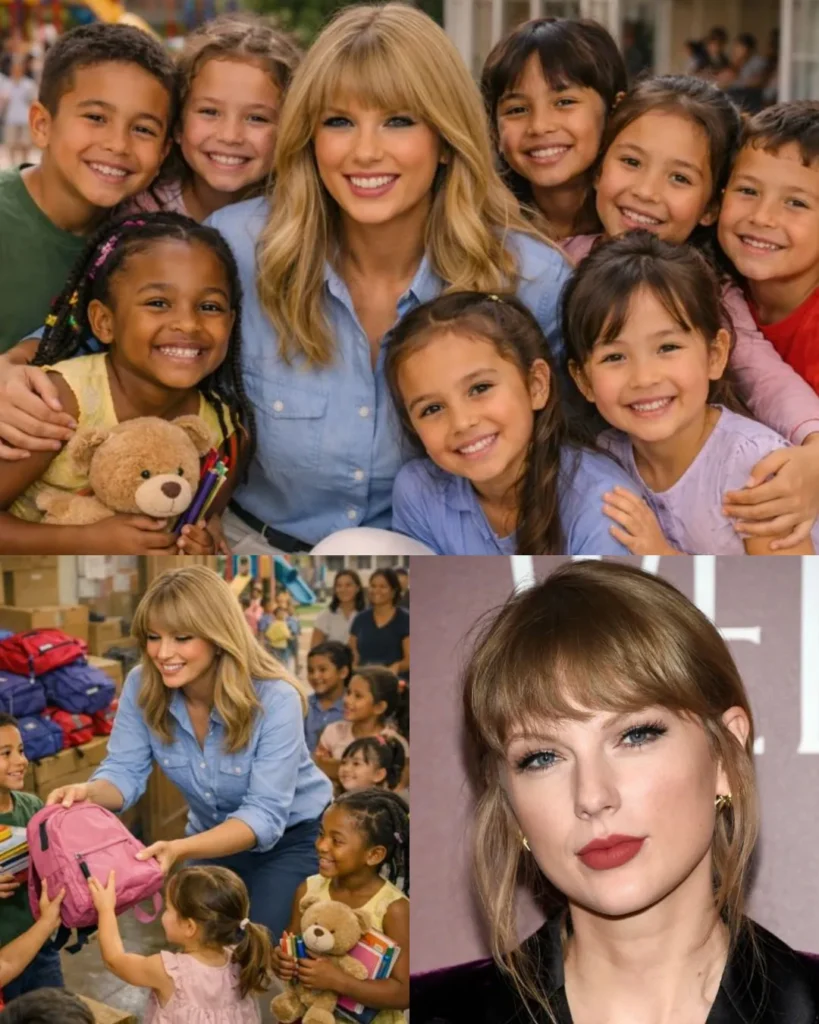
(TAYLOR SWIFT QUIETLY TRANSFORMED AN ORPHANAGE AHEAD OF A NEW SCHOOL YEAR — AND THE FINAL GIFT SHE LEFT BEHIND CHANGED HOW EVERYONE SAW THE FUTURE) The first sign that something unusual was happening came in the final weeks of summer. Delivery trucks began pulling up outside a modest orphanage on the edge of the city, unloading box after box before quickly driving away again. Staff members assumed it was a delayed shipment connected to the upcoming school year. But as the boxes stacked higher in the hallways, it became clear this was something else entirely. Inside were brand-new backpacks, neatly labeled by size. Textbooks still wrapped in plastic. Fresh uniforms, shoes, notebooks, art supplies, and lunch containers. Everything was new. Nothing was leftover. Nothing was generic. By the end of the day, the storage room was full. No invoice accompanied the delivery. No logo appeared on the packaging. When administrators made calls to their usual partners, no one claimed responsibility. For the children, however, the mystery barely mattered. They lined up quietly, holding backpacks that didn’t sag at the seams. They ran their hands over crisp pages that hadn’t already been written in. For many of them, it was the first time the start of a school year felt like a beginning rather than a reminder of what they lacked. Within days, the changes expanded beyond supplies. Painters arrived to refresh classrooms that hadn’t seen new color in over a decade. Broken desks were replaced. Lighting was improved. Study corners were redesigned with soft chairs and shelves stocked with age-appropriate books. Even the small library, long underused due to outdated materials, was reorganized into a space children wanted to stay in. Then attention turned outside. The orphanage’s outdoor area had once been little more than cracked concrete and a rusted swing set. Over the course of a single week, it was transformed. New play structures were installed. Grass was laid. Benches appeared beneath shade trees. Murals brightened the walls with scenes of imagination rather than instruction. For the first time in years, children stayed outside after lessons ended. Staff members watched from the windows, quietly emotional. This was not a temporary donation or a seasonal project. It was a complete reimagining of how the space could feel. Only after the work was nearly finished did the administrators learn who was behind it. Taylor Swift. The discovery didn’t come through a press release or public statement. It surfaced through a contractor who mentioned her name casually while discussing final inspections, surprised that anyone didn’t already know. May you like “JELLY ROLL’S SHOCKING CONFESSION: THE DARKEST MISTAKE OF HIS ADULT LIFE IS CHEAT ON HIS WIFE” Kim Kardashian Says She Felt ‘Stockholm Syndrome’ in Marriage to Ex Kanye West DIDDY’S NIGHTMARE BEHIND BARS: RAPPER ‘SECONDS FROM DEATH’ AFTER WAKING UP TO A KNIFE AT HIS THROAT She had asked for the work to be done discreetly. No announcements. No photos. No social media updates. She wanted the focus to remain on the children returning to school, not on the person paying the bills. When Taylor arrived at the orphanage days later, it was without entourage or ceremony. She walked the halls quietly. She listened more than she spoke. She sat with children during activities and asked them about their favorite subjects, their worries about the upcoming year, and what they hoped school might feel like this time around. Staff members say she paid close attention to the details. She noticed which chairs wobbled. Which shelves were still empty. Which children lingered in corners rather than joining group play. Before leaving that afternoon, she asked to meet privately with the administrators. They expected a brief check-in. Perhaps a thank-you. Maybe a few logistical questions. Instead, she placed a folder on the desk. Inside was paperwork outlining a financial gift far exceeding the cost of the renovations already completed. Enough to stabilize the orphanage’s operating budget for years, fund counseling services, provide scholarships, and ensure no child would have to leave due to lack of resources. The administrators sat in silence, rereading the documents. But what left them truly stunned came at the end. A handwritten note, short and precise. The funds, Taylor requested, were not to be used to expand her name, commemorate her involvement, or attract attention. There were no naming rights. No plaques. No annual events bearing her image. Her only request was that the money be used to guarantee continuity. Teachers should not disappear midyear. Programs should not vanish when funding cycles ended. Children should not have to re-adjust to instability once again. She asked that decisions about the funds be made locally, by people who knew the children by name, not by outside boards or distant managers. According to one administrator present, the request reframed everything. “She didn’t want to save the orphanage,” the administrator later said. “She wanted to remove the fear that it could disappear.” When Taylor left, there was no farewell speech. She hugged the staff, waved to the children, and walked out as quietly as she had arrived. In the weeks that followed, the impact of her final gift became clear. Staff contracts were extended. Mental health services expanded. After-school tutoring programs became permanent rather than seasonal. Children who had grown used to uncertainty began to relax into routine. For the administrators, the most profound shift was psychological. They no longer planned month to month. They planned years ahead. And that, they say, is what changed everything. The story eventually reached the public, not through deliberate exposure, but through whispered gratitude that spread beyond the orphanage walls. When asked later why she insisted on silence, someone familiar with Taylor’s thinking explained it simply. “She didn’t want the children to feel like they were part of a story,” the person said. “She wanted them to feel like they were part of a future.” Today, the orphanage hums with a different kind of energy. Not excitement tied to a one-time event. But calm. The kind that comes from knowing school will start on time. That teachers will still be there. That the playground won’t vanish next year. For those who work there, the memory that lingers most is not the renovations or the paperwork. It is the moment they realized the final gift was not the money itself. It was the stability it protected.
January 16, 2026
Uzaima Babar