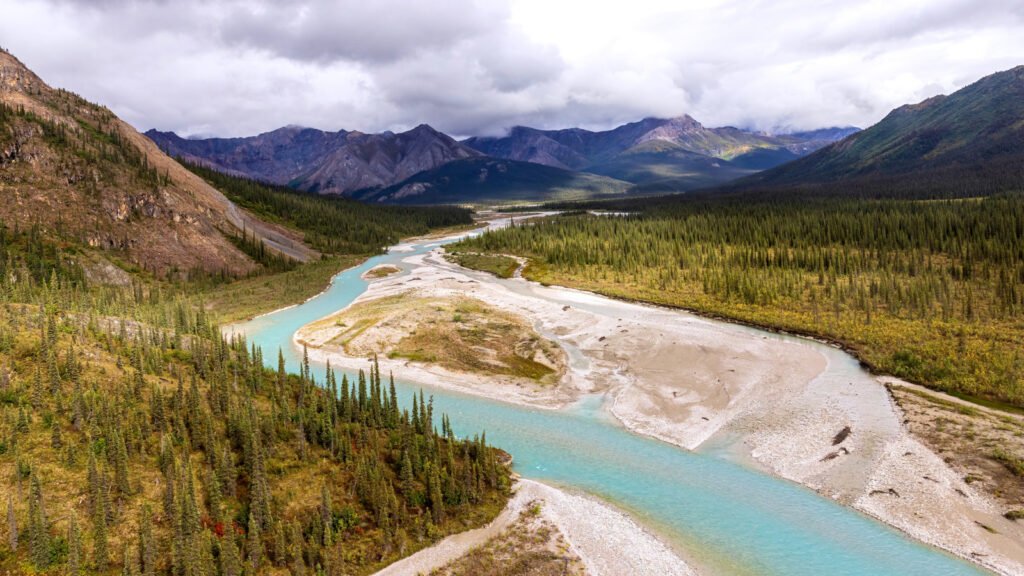
In early October, the Trump Administration signed an order approving the Ambler Road Project, which is set to cut through part of Gates of the Arctic National Park and Preserve in two to “unlock Alaska’s Mineral Potential.”
Now, environmental agencies are asking the U.S. District Court for Alaska to void the order, claiming it violates four different acts.
Here is a closer look at what these environmental groups are claiming, details about the Ambler Road Project, and how visitors may be affected.
U.S. Government Accused Of Breaking Four Laws With Ambler Road Project

On October 6, 2025, President Donald Trump signed an executive order to “unleash Alaska’s extraordinary resource potential, including advancing the Ambler Access Road Project.”
The Ambler Road Project consists of constructing a 211-mile industrial mining road that would cut across portions of the Gates of the Arctic National Park and Preserve.
Ten environmental organizations are now asking the U.S. District Court for Alaska to void the order, which would grant rights-of-way across the national park and across lands managed by the Bureau of Land Management (BLM). According to them, the Ambler Road Project breaks the following acts:
- Alaska National Interest Lands Conservation Act (ANILCA)
- Clean Water Act
- National Environmental Policy Act (NEPA)
- Federal Land Policy and Management Act
Environmental groups had already sued the Trump administration back in 2020 when the project was first approved. In 2024, the U.S. Bureau of Land Management denied the requested right-of-way across BLM lands due to the road’s impact on local communities and ecosystems.
Lawsuit plaintiffs |
|---|
Northern Alaska Environmental Center |
Center for Biological Diversity |
National Parks Conservation Association |
Alaska Community Action on Toxics |
Alaska Wilderness League |
Alaska Wildlife Alliance |
Earthworks |
Wilderness Society |
Winter Wildlands Alliance |
Sierra Club |
However, the Trump administration reinstated the permits in October 2025 and also purchased a 10% stake in Trilogy Metals, one of the main companies operating in the region.
According to a press release published by the Center for Biological Diversity, Maddie Halloran, Alaska state director for the Alaska Wilderness League, stated:
“The Ambler road project is a perfect example of the Trump administration getting Alaska land and water policy backwards, and we are proud to continue this effort to hold them accountable (…). Now that the federal government has directly invested in a mining company that depends on this road to profit from public lands, it’s clearer than ever that this venture prioritizes polluters over people.”
Despite the accusations, Robyn Reyes, spokesperson for the Alaska Industrial Development and Export Authority, isn’t concerned and told the National Park Traveler that these “misguided and frivolous litigation will not affect the timetable for constructing the road.”
The Ambler Road Would Cut Gates Of The Arctic National Park In Two, While Crossing 3,000 Waterways

While no date has been set for the start of construction work, the Alaska Industrial Development and Export Authority (AIDEA) said it was moving as quickly as possible to begin the project, while claiming it has already committed $50 million to “expenses and liabilities,” including legal costs.
The gravel corridor will link the undeveloped Ambler mining district in northwestern Alaska with the Dalton Highway, allowing mining companies to access this region rich in minerals such as copper and zinc.
Several Alaskan communities have opposed the project, citing environmental concerns and the threat it poses to fisheries and local wildlife:
“The Ambler Road isn’t just a path of gravel; it is an industrial knife through the heart of the Brooks Range and the migratory paths of thousands of caribou (…) The plan involves thousands of river and stream crossings, risking irreversible pollution to the watersheds that fuel our state’s fisheries. We cannot allow the short-term profits of foreign mining companies to sacrifice the long-term survival of Alaska’s most iconic wildlife and the people who depend on them,” said Nicole Schmitt, executive director of Alaska Wildlife Alliance.
The route will cut across 26 miles of Gates of the Arctic National Park, cross nearly 3,000 waterways, and fill more than 2,000 acres of wetlands.
Visitors to Gates of the Arctic National Park will also be able to witness the consequences of this project.
Gates Of The Arctic National Park Visitors May Encounter Fewer Animals And See Drastic Color Changes
In the last few years, over 200 streams in Alaska, including rivers passing through the Gates of the Arctic National Park, have turned a bright orange color due to climate change. While the mining sector isn’t directly linked to this phenomenon, the construction of the Ambler road could act as a feedback loop, attracting more industries to the area, thereby increasing pollution. This would then worsen the already critical climate crisis in the region, potentially affecting more rivers.
In addition, visitors may also be less likely to see wildlife. According to the Natural Resources Defense Council (NRDC), ten major tributaries of the Salmon River, one of the waterways that has now turned orange, present metal concentrations considered toxic to aquatic life. Scientists have now documented a decline in chum salmon, Dolly Varden char, and slimy sculpin.
According to a 2025 study, road cutting across national parks also fragments caribou habitat while disrupting their migration patterns, potentially increasing stress and mortality rates. The study shows that roads in Western Alaska, including the one leading to the Red Dog Mine, lead caribou to exhibit altered movement behaviors. About 60% of caribou alter their movement when encountering a road, bouncing away from it and tracking along the asphalt. Caribou falling within this 60% also spent an average of 9.4 days longer near these roads.
Despite concerns raised by several environmental groups, it seems the U.S. government has no intention of halting the Ambler Road Project.
Source link