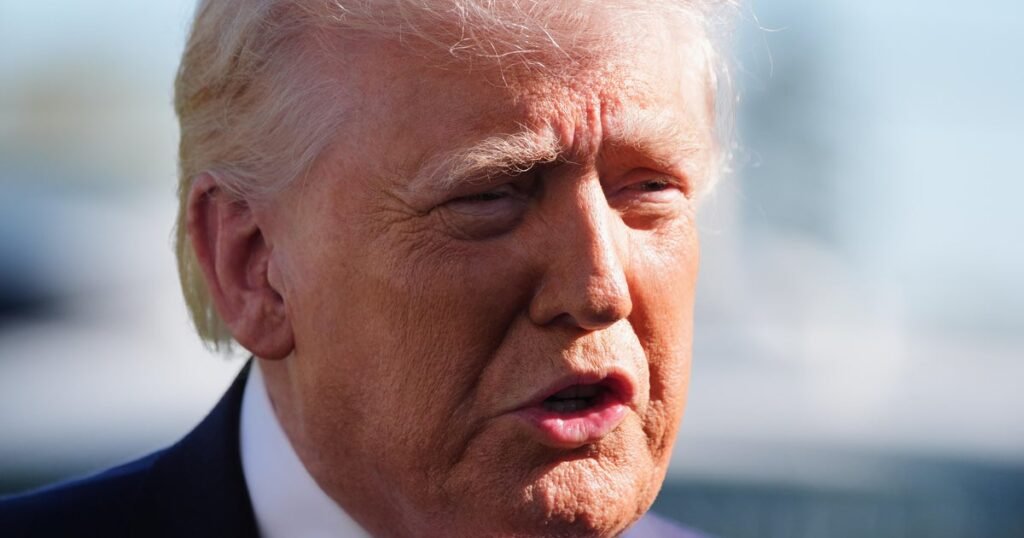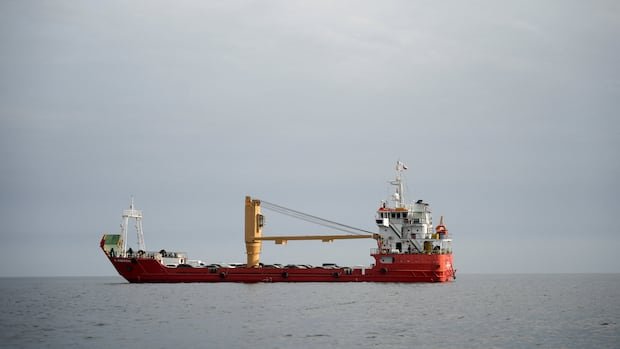
U.S. President Donald Trump said on Sunday the U.S. navy would start blockading the Strait of Hormuz, raising the stakes after marathon talks with Iran failed to reach a deal to end the war, jeopardizing a fragile two-week ceasefire.
The U.S. Central Command said U.S. forces would begin implementing the blockade of all maritime traffic entering and exiting Iranian ports at 10 a.m. ET on Monday.
It would be “enforced impartially against vessels of all nations entering or departing Iranian ports and coastal areas, including all Iranian ports on the Arabian Gulf and Gulf of Oman,” a CENTCOM statement on X said.
U.S. forces would not impede freedom of navigation for vessels transiting the Strait of Hormuz to and from non-Iranian ports, and additional information would be provided to commercial mariners through a formal notice prior to the start of the blockade, it said.
Trump said in an earlier post on social media the U.S. would take action against every vessel in international waters that had paid a toll to Iran, and begin destroying mines that he said the Iranians had dropped in the strait, a choke point for about 20 per cent of global energy supplies that Iran has blocked.
“No one who pays an illegal toll will have safe passage on the high seas,” Trump wrote. “Any Iranian who fires at us, or at peaceful vessels, will be BLOWN TO HELL!”

U.S. President Donald Trump declared the U.S. will impose its own ‘complete blockade’ on the Strait of Hormuz, preventing shipping from reaching all Iranian ports. The announcement came after weekend peace talks failed to secure a deal.
Iran’s Revolutionary Guards responded to Trump by warning that military vessels approaching the Strait will be considered a ceasefire breach and dealt with harshly and decisively, underlining the risk of a dangerous escalation.
Iran’s parliamentary Speaker Mohammad Baqer Ghalibaf, who led his country’s delegation to the talks along with Foreign Minister Abbas Araqchi, said Trump’s new threats would have no effect on Iran.
“If you fight, we will fight, and if you come forward with logic, we will deal with logic,” he said in comments carried by state media.
Iran cites lack of trust
Each side had earlier blamed the other for the failure of talks to end six weeks of fighting that has killed thousands of people, roiled the global economy and sent oil prices soaring.
Ghalibaf blamed the U.S. for not winning Tehran’s trust despite his team offering “forward-looking initiatives.”
Araqchi said Iran had engaged in good faith but had “encountered maximalism, shifting goalposts and blockade” when just inches away from an “Islamabad MOU.”
“Zero lessons earned,” he said. “Good will begets good will. Enmity begets enmity.”

The talks, which came after a ceasefire earlier in the week, were the first direct U.S.-Iranian meeting in more than a decade and the highest-level discussions since the 1979 Islamic Revolution.
Vice-President JD Vance, who headed the U.S. delegation, said: “The bad news is that we have not reached an agreement, and I think that’s bad news for Iran much more than it’s bad news for the United States of America.”
Vance said Iran had chosen not to accept American terms, including not to build nuclear weapons.
Tehran has long denied seeking to build a nuclear weapon.
In an interview with Fox News after his post about the strait, Trump nevertheless said he believed Iran would continue to negotiate and called the discussions “very friendly.”
Trump also said NATO allies he has criticized for failing to back the war he launched along with Israel on Feb. 28 wanted to help with the operation in the strait.
A U.S. official said Iran had rejected Washington’s call for an end to all uranium enrichment, the dismantling of all major enrichment facilities and the transfer of highly enriched uranium.
The two sides also failed to reach agreement on the U.S. demand that Iran cease funding for Hamas, Hezbollah and the Houthis, as well as to fully open the strait, the official added.

The U.S. and Iran reached a fragile ceasefire agreement hours after President Donald Trump’s threat to destroy Iran’s ‘whole civilization.’ Andrew Chang explains what’s complicating the deal, breaking down the confusion around its terms and the hurdles remaining as U.S.-Israel negotiations with Iran continue.
Images provided by The Canadian Press, Reuters, Adobe Stock and Getty Images
Tehran is demanding control of the Strait of Hormuz, payment of war reparations and a ceasefire across the region, including in Lebanon, according to Iranian state TV and officials, as well as the release of its frozen assets abroad.
Tehran also wants to collect transit fees in the Strait of Hormuz.
Trump’s stated goals have shifted, but at a minimum he wants free passage for global shipping through the strait and the crippling of Iran’s nuclear enrichment program to ensure it cannot produce an atomic bomb.
‘Imperative’ to maintain ceasefire
Pakistan’s foreign affairs minister, Ishaq Dar, said it was “imperative” to preserve the ceasefire that was reached on Tuesday, as the sides attempt to wind down a war that began on Feb. 28 when the U.S. and Israel attacked Iran.
Israeli security cabinet minister Ze’ev Elkin told Army Radio that more talks were still an option, but he added: “The Iranians are playing with fire.”
Even as the talks took place, U.S. ally Israel continued bombing civilians and infrastructure in populated areas of Lebanon as it targeted Tehran-backed Hezbollah militants, insisting that conflict was not included in the Iran-U.S. ceasefire — despite it being part of the plan presented by Pakistan, which hosted the talks. Iran says the fighting in Lebanon must stop.
The Israeli military said it struck Hezbollah rocket launchers overnight into Sunday, and black smoke could be seen rising in the southern suburbs of the Lebanese capital Beirut on Sunday. In Israeli villages near the border, air raid sirens sounded, warning of incoming rocket fire from Lebanon.

Trump said on Sunday the price of oil and gasoline may remain high through November’s U.S. midterm elections, a rare acknowledgement of the potential political fallout from the war.
Despite the differences in Islamabad, three supertankers fully laden with oil passed through the Strait of Hormuz on Saturday, shipping data showed, in what appeared to be the first vessels to exit the Gulf since the ceasefire deal.
Hundreds of tankers are still stuck in the Gulf, waiting to exit during the two-week ceasefire period.
Source link