The conventional read of Japan’s foreign policy in 2026 is that Tokyo is hedging: carefully managing relationships on multiple fronts in response to an uncertain environment. It is the kind of framing that sounds analytically serious and explains very little. Every country hedges. What is actually happening in Tokyo is more consequential and more original than that word suggests.
Japan is in the early stages of becoming something it has not been since 1945: a country with genuine strategic autonomy. Not independence from its alliances; Tokyo is not walking away from Washington, and anyone who reads the current defense buildup as anti-American is missing the point. What is changing is something more fundamental. Japan is building the foreign policy infrastructure of a country that chooses its partnerships rather than inheriting them. That is a different kind of state from the one the postwar settlement produced, and the transition is happening faster and more deliberately than most coverage acknowledges.
The Dual Hedge Was Never a Strategy
The “dual hedge” — anchoring security in the US alliance while maintaining deep economic ties with China, was not a strategic choice Tokyo made. It was a coping mechanism that emerged from the constraints of the postwar order. Japan’s constitution restricted its military posture. American patronage provided the security umbrella that the constitution made it impossible to build independently. Chinese economic growth provided the export-led prosperity that made the whole arrangement sustainable domestically.
For decades, Tokyo did not need to think strategically about its position in the international system because the dual hedge thought for it. The American alliance meant Japan’s security questions were answered in Washington. The Chinese economic relationship meant Japan’s growth questions were answered in Beijing. Tokyo’s role was to manage the relationship between those two answers, which required considerable diplomatic skill but not genuine strategic independence.
That era is ending, and what is replacing it is not a better hedge. It is the first serious attempt in Japan’s postwar history to develop an independent strategic doctrine, one that does not assume American reliability and does not assume Chinese restraint.
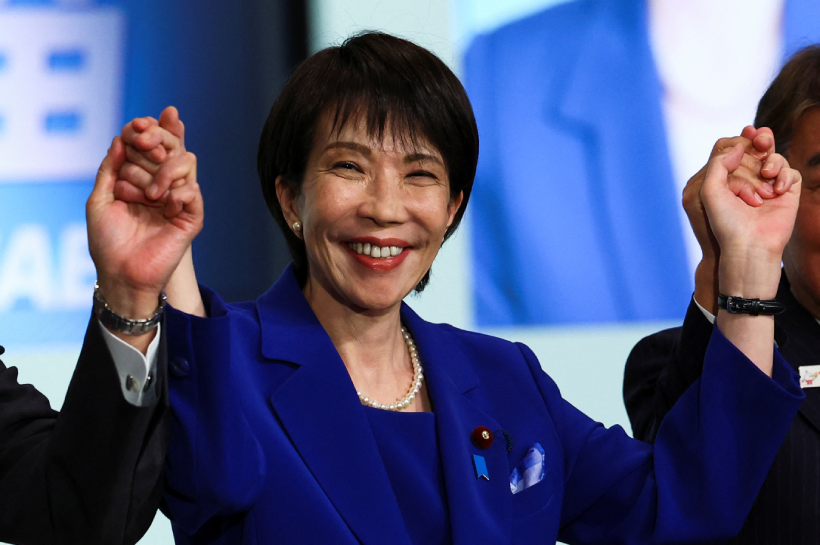
Takaichi Is Doing Something Abe Never Finished
For years Shinzo Abe has been working to shift Japan’s defense policy from pacifism to normalization. He reinterpreted the constitution to give the nation collective self-defence rights, pushed defence expenditure up to 2% of GDP, and laid the rhetorical groundwork for a Japan that can use military force to defend itself in its own interests. He never made it to the completion of the project. Takaichi is finishing it and he is taking it further in areas that perhaps haven’t been done enough.
The most obvious is the constitutional revision for 2027. But the more significant shifts are in the structure of Japan’s external relations. The POWERR Asia energy initiative was not an aid program, it was begun in April 2026. It is an intentional effort to establish a regional energy network which will not be dominated by China’s infrastructure, to forge an Asian energy network apart from Beijing. This isn’t hedging for defense. It is a contest to win influence in the region, not military influence, but economic and institutional.
The Japan-Philippines reciprocal access agreement, signed in 2024, deserves more attention than it has received. Japan deploying forces to a foreign country for the first time since the Second World War is not a footnote in the regional security story. It is a paradigm shift in what Japan is willing to do and where it is willing to do it. Combined with deepened operational cooperation with Australia and the quietly strengthened trilateral arrangements with South Korea, Japan is assembling a security architecture that can function with reduced American involvement if necessary. That architecture does not exist yet in any robust form. The fact that Tokyo is building it at all is a significant point.
The Capital Flows Paradox
Here is the detail that disrupts the clean narrative of Japan moving away from China: Japanese investment in China kept rising through 2025 despite every political tension. Chinese rare earth restrictions, radar lock-ons near the Senkakus, military exercises around Okinawa, the diplomatic language downgrade in the 2026 Bluebook; none of it stopped the Japanese capital from flowing east.
The confusion isn’t just the product of corporate naivety. Japanese firms doing it this way are doing something on purpose, by investing through Swiss subsidiaries and third-country joint ventures, they are continuing to invest in China, but avoiding the legal and political risks. They’re keeping their options open. They are hoping for a cooling of the political sparring between Tokyo and Beijing or at least that the economic relationship is not worth the political timeline that they can’t manage.
That bet may be correct. A deflating Chinese economy has softened Beijing’s approach toward Japan in recent months, fewer military provocations, some easing of the seafood import ban, quieter rhetoric on Taiwan. The relationship that looks like a new Cold War at the political level looks like deeply entangled commercial pragmatism at the corporate level, and the two coexist because neither government nor business community has an interest in forcing a full decoupling that would hurt both sides simultaneously.
What the capital flows paradox reveals is that Japan’s strategic ambiguity is not a failure of political clarity. It is a deliberate position maintained across government and business simultaneously, preserving the maximum number of options for as long as possible. The question is whether that position can be sustained as the US-China competition intensifies and the pressure to choose sides grows.
The China-Taiwan Trilemma Driving Every Decision in Tokyo
Japan’s defense planners have a phrase for the central challenge of the current moment: the China-Taiwan trilemma. Japan must deter Chinese military adventurism in its neighborhood. It must prepare operationally for instability around Taiwan, whose security is geographically inseparable from Japan’s own. And it must hedge against the possibility that American security commitments, which have already shown conditionality under Trump, who pulled Pacific munitions for the Iran campaign and discussed Taiwan arms sales directly with Xi without consulting Tokyo, might not be fully available at the moment they are most needed.
All three objectives need to be pursued simultaneously. Pursuing any one of them too aggressively undermines the others. Maximum deterrence of China risks provoking the escalation Japan is trying to prevent. Maximum preparation for Taiwan contingencies risks entangling Japan in a conflict on terms it does not control. Maximum hedging against American uncertainty risks signaling that the alliance is weakening, which itself undermines deterrence.
Japan’s 2% defense spending, its Uranos KI autonomous targeting system, its reciprocal access agreements, its energy diplomacy, all of it is an attempt to navigate this trilemma without resolving it, because the trilemma cannot be resolved. It can only be managed, with sufficient strategic depth that Japan retains options regardless of which of the three scenarios materializes.
The Risk Analysis Worth Watching
The standard risk analysis of Japan’s position focuses on the danger of choosing the wrong side in a US-China confrontation. That is a real risk but not the most immediate one.
The more acute danger is that Japan’s incrementalism leaves it with insufficient depth in any direction when it matters most. Too distant from Washington to claim the full weight of the alliance. Too alienated from Beijing to use economic leverage as a stabilizing tool. Not yet connected enough to its new partners in Manila, Canberra, Seoul, and Southeast Asian capitals to rely on those relationships under pressure.
Strategic autonomy built incrementally, without ever fully committing to the architecture required to make it real, produces a country that has the posture of independence without the substance. Japan is moving in the right direction. The pace of movement and the domestic political constraints Takaichi faces, a fragmented Diet, a bare parliamentary majority, inflation eroding household confidence in defense spending trade-offs mean the gap between Japan’s strategic ambitions and its actual strategic depth remains significant.
What Japan is building is real and important. Whether it is being built fast enough, and whether the domestic political foundation exists to sustain it through the inevitable periods of pressure and cost, is the question that the next two years will begin to answer.
Source link