The U.S. military has carried out its largest offensive deployment to the Middle East since the Israel-Hamas war began in October 2023, according to a Haaretz analysis of open-source aviation data.
In recent weeks, Washington has sent squadrons of fighter jets, stealth bombers and large quantities of weaponry to the region – amid its ongoing campaign in Yemen and ahead of the ultimatum issued by President Donald Trump to Iran over its nuclear program.
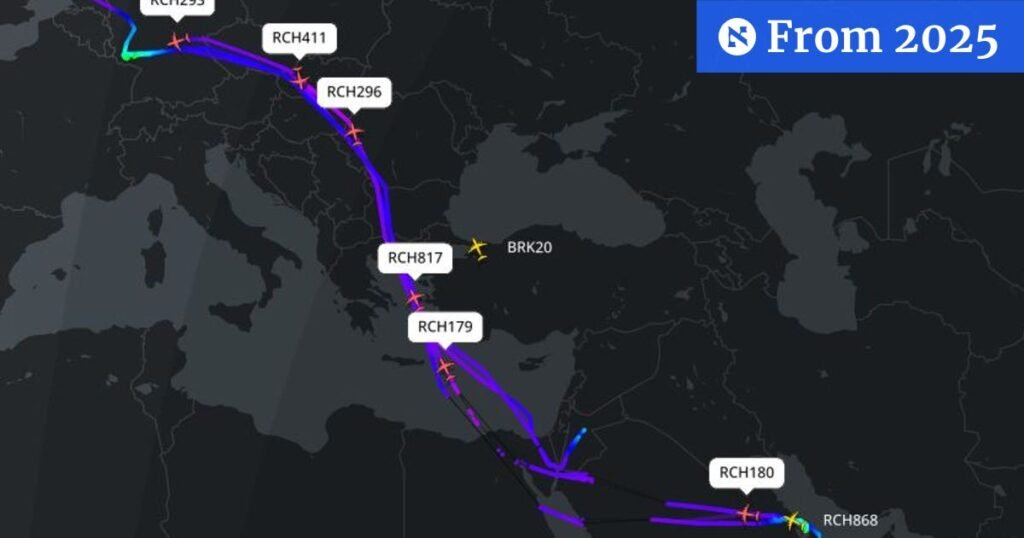
At least 140 heavy transport aircraft landed in Qatar, Bahrain, the United Arab Emirates, Saudi Arabia, Kuwait and Jordan during the month of March, originating from several key U.S. military bases. Most were loaded with equipment, according to data transmitted mid-flight.
Since the outbreak of Israel’s war with Hamas and Hezbollah, the United States has deployed significant forces to the region and launched an airlift of weapons and equipment to Israel – particularly during the war’s first weeks, and around the two major Iranian missile attacks on Israel last April and October.
This new buildup, first reported by Haaretz last week, marks a roughly 50 percent increase over the previous monthly peak in U.S. military flights to the region.

The transport and refueling aircraft – identified on flight-tracking platforms and air traffic communications – accompanied the arrival of numerous fighter jets from bases in the U.S. and Europe. Among them, an A-10 ground-attack squadron that was deployed to Jordan and stealth F-35s that were sent to Saudi Arabia.
Satellite images from the U.S. base on Diego Garcia – a remote island in the Indian Ocean – show at least six B-2 stealth bombers stationed on the island. Additional bombers were detected en route to the base, and it is possible some are housed in hangars, hidden from satellites. This deployment amounts roughly one-third of the U.S. Air Force’s B-2 fleet.

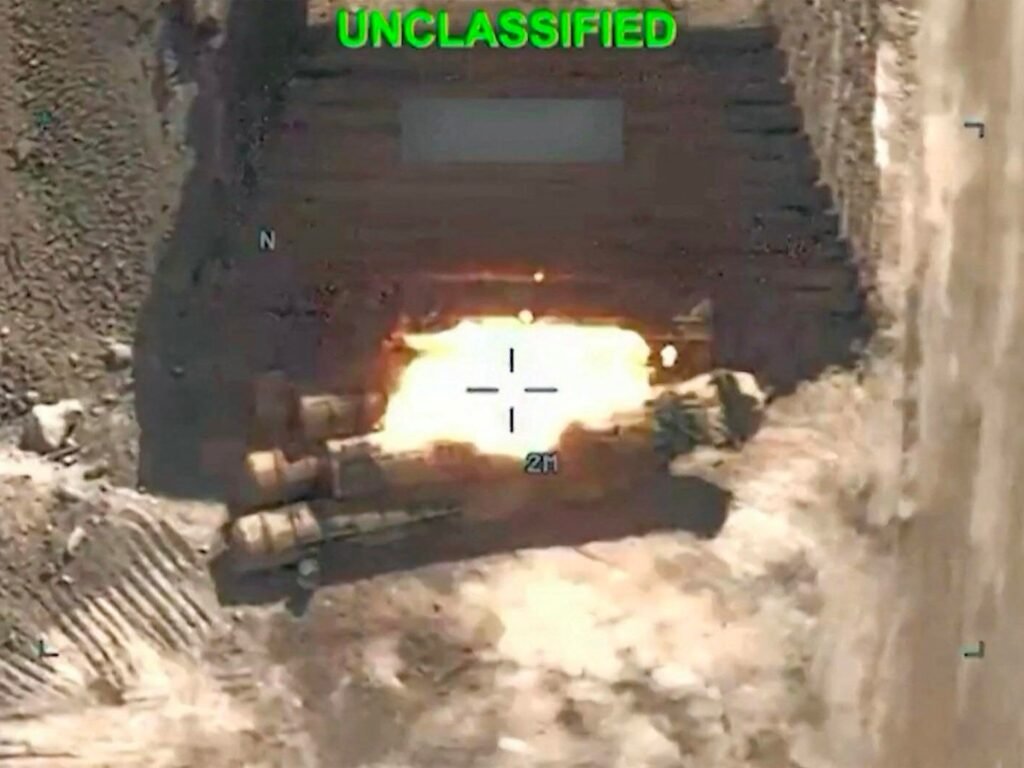
Diego Garcia was previously used as a launch point for bombing missions in Afghanistan and Iraq. The island lies about 4,000 kilometers (about 2485 miles) from Iran and Yemen – close enough to support a large-scale strike on either, while remaining beyond the reach of their drones and ballistic missiles. In October 2024, B-2 bombers took part in strikes on underground weapons depots in Yemen.
Over 20 U.S. Air Force cargo planes arrived from South Korea and Fort Sill, Oklahoma, likely carrying Patriot and THAAD batteries to bolster U.S. forces in the Persian Gulf against a potential Iranian attack. A U.S. THAAD system has been stationed in Israel since October, complementing the Israeli Arrow missile defense system, and it has intercepted at least seven ballistic missiles fired from Yemen.

Additional U.S. transports landed in Djibouti and at a Saudi Red Sea airfield, where the USS Truman carrier strike group has been operating in recent months. Its aircraft have regularly struck targets in Yemen. According to U.S. reports, another strike group led by the USS Carl Vinson, currently in the Pacific, is also being dispatched toward the Gulf.
Aviation data also shows a modest uptick in U.S. military flights to Israel in March, alongside Israeli flights to retrieve munitions from U.S. and European bases.
On Tuesday, U.S. Central Command chief Gen. Michael Kurilla landed in Israel for meetings with senior Israeli military officials. Kurilla, a regular visitor, typically comes once a month – but this visit comes amid a sharp escalation in regional deployments and growing public threats between Trump and Iran.
“If they don’t make a deal, there’ll be bombing, it’ll be bombing the likes of which they have never seen before,” Trump said over the weekend. Iran responded that it “will not negotiate under pressure and will know how to respond to any attack.”
Despite the rhetoric, a quieter diplomatic channel also appears to be active – one that could eventually lead to talks.
Source link