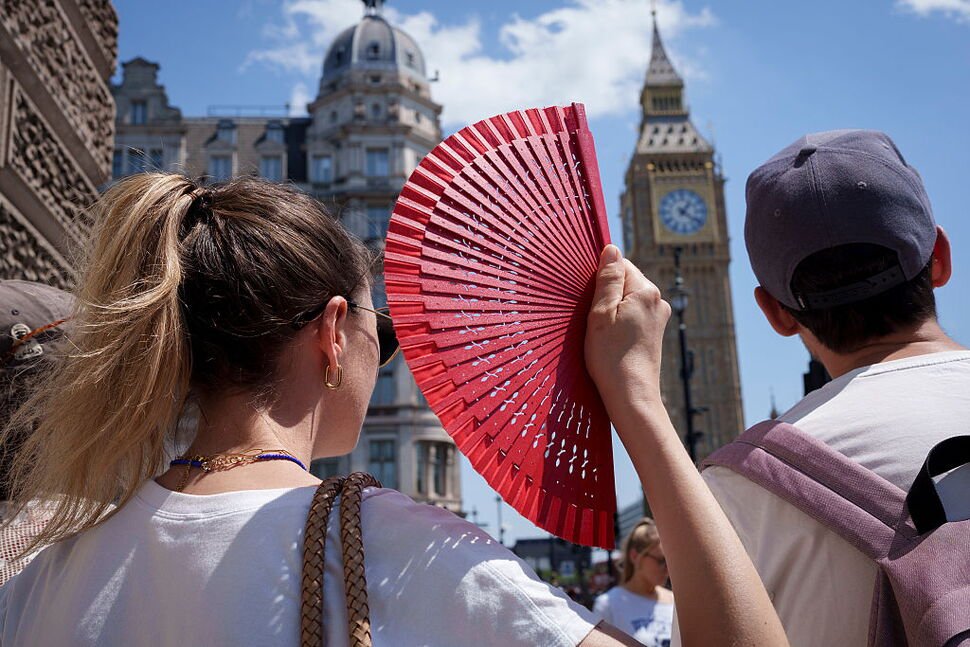
A dangerous heat wave continues to grip Europe, with record-breaking temperatures leading to deaths in France and the United Kingdom. Stateside, it’s the first official day of President Donald Trump’s Great American State Fair, with a 110-foot ferris wheel, movie screenings, daily rodeos and more set up on the National Mall.
Meanwhile, Trump yesterday cancelled a bill signing for bipartisan housing legislation in a move that surprised even his own congressional allies. And a federal judge blocked key portions of Trump’s election agenda while the head of the U.S. Postal Service defended a proposal requiring states to hand over voter rolls or face consequences in the 2026 midterms.
Make Your Inbox Smarter
Sign up for these free email newsletters from U.S. News:
Pick Newsletters
Plus, amid a flu outbreak that has sickened more than 200 Air Force recruits and hospitalized several others, the military is reinstating flu-shot requirements for basic trainees, reversing a policy change made just months ago.
Here are six stories worth following:
Quote Driving the News:
“After Secretary Hegseth scrapped the military’s flu vaccine mandate, it was only a matter of time before an outbreak occurred,” Rep. Joaquin Castro (D-Texas) said of the flu outbreak at Lackland Air Force Base in San Antonio. “It was a reckless decision that put troops in harm’s way and undermined our military readiness.”
Two Powerful Earthquakes Rock Venezuela
What we’re watching: The two strongest earthquakes to hit Venezuela in over a century struck yesterday, killing at least 164 people and injuring over 1,000. The earthquakes’ epicenters hit about 100 miles from the nation’s capital city, Caracas. The United States Geological Survey expects the death toll to rise into the thousands over the next few days, as rescue workers rush to free residents from collapsed buildings and rubble. Current casualty numbers do not include La Guaira state, considered the hardest-hit region which acting President Delcy Rodríguez referred to as a “disaster zone.” President Donald Trump promised to support the country in a social media post last night. The country’s main airport in Caracas was also severely damaged, leading the U.S. Defense Department to take over aid flights.
Why it matters: Recovery is likely to be complicated as Venezuela continues a difficult transition following the U.S. Special Forces’ capture of former president Nicolás Maduro in January. The United Nations mission in Venezuela called on the government to lift social media restrictions from the Maduro era that were started to suppress conversations around the legitimacy of his election. Rodríguez, Maduro’s former vice president, has been working with Trump to open the country to foreign investments and trade.
Great American State Fair Opens on the National Mall
What we’re watching: The Great American State Fair begins today on Washington’s National Mall after President Trump kicked off proceedings with a rally on the Mall last night. The 16-day exposition will feature pavilions representing all 56 states and territories – including for states with governments that have chosen not to participate, where tourism groups and private businesses from those states will represent them – educational exhibits, live entertainment, rides, food vendors and themed programming stretching from the U.S. Capitol to the Washington Monument. It’s scheduled to run through July 10.
Why it matters: The Great American State Fair is one of the largest events planned as part of the United States’ semiquincentennial celebration and is intended to showcase the culture, history, industries, and traditions of states and territories across the country. The event has also attracted political attention after several performers withdrew and some states declined to participate, turning what was envisioned as a national celebration into a broader debate over how America’s 250th anniversary should be commemorated.
Military Reinstates Flu Shot Requirement After Flu Outbreak
What we’re watching: The U.S. military is once again requiring flu vaccinations for basic trainees after a growing outbreak at Joint Base San Antonio-Lackland in Texas sickened nearly 300 people and hospitalized four. The policy reversal comes just two months after Defense Secretary Pete Hegseth ended the military’s longstanding annual flu-shot requirement, which had been in place since 1945. Only about 40% of recruits at the base had been vaccinated when the outbreak began, ABC News reported, compared with near-universal vaccination rates under the previous policy.
Why it matters: The outbreak has reignited debate over the Trump administration’s vaccine policies. Health Secretary Robert F. Kennedy Jr. has removed members of a key federal vaccine advisory committee, ended federal recommendations for some COVID-19 vaccinations and taken steps that critics say could undermine longstanding immunization programs. Military basic training environments are particularly vulnerable to infectious disease because recruits live, eat and train in close quarters, allowing illnesses to spread rapidly.
Trump Cancels Housing Bill Signing
What we’re watching: President Trump abruptly canceled a planned signing ceremony for the 21st Century ROAD to Housing Act, bipartisan legislation which aimed at housing affordability, saying he will sign it until Congress passes the SAVE America Act, his election proposal. The housing bill passed Congress with overwhelming bipartisan support and includes measures aimed at increasing housing supply, speeding up construction, reducing regulatory barriers, and limiting the ability of large institutional investors to buy single-family homes.
Why it matters: The move puts a rare bipartisan housing package in limbo at a time when affordability remains one of voters’ top concerns. It also escalates a broader political fight over voting laws, with Trump using a popular housing measure as leverage to advance the SAVE America Act, which imposes new restrictions on voter identification and mail-in ballots and faces significant hurdles in the Senate. The standoff could delay action on one of the most significant housing reform efforts in decades while intensifying debate over election rules ahead of the 2026 midterms.
Dozens Drown Seeking Relief Amid European Heat Wave
What we’re watching: France recorded its hottest day ever as a sweltering heat wave continues to grip much of Europe. French authorities reported that at least 40 people drowned in recent days, many while attempting to cool off amid the extreme temperatures. Much of Western Europe remains under heat alerts, and meteorologists warn that the hot, dry conditions could persist for days, increasing risks for heat-related illnesses and wildfires. Health officials across the continent are urging residents to limit outdoor activity, stay hydrated and seek air-conditioned spaces.
Why it matters: The deaths highlight the growing public health risks associated with climate change, as Europe’s heat waves become increasingly frequent and intense. Beyond heatstroke and dehydration, officials say extreme heat often leads more people to seek relief in potentially dangerous swimming conditions, contributing to spikes in drowning incidents. The prolonged heat is also placing additional strain on hospitals, energy grids, transportation networks and emergency services, underscoring the broader challenges posed by a warming climate.
Election Fight Intensifies as Judge Blocks Trump Voting Order
What we’re watching: A federal judge has permanently blocked key parts of President Trump’s executive order requiring proof of citizenship to register to vote in federal elections. The judge ruled that the Constitution gives election administration authority to Congress and the states, not the White House. Meanwhile, the head of the U.S. Postal Service told lawmakers yesterday that the USPS would require states to provide detailed lists of mail-ballot recipients to the federal government and restrict the delivery of mail-in ballots in states that don’t comply.
Why it matters: The developments reignite the growing legal and political battle over election rules ahead of the 2026 midterms. Supporters of the administration argue the measures are needed to strengthen election integrity and verify voter eligibility, while opponents contend they could create new barriers to voting and expand federal involvement in an area traditionally managed by states. With lawsuits continuing and Congress still debating Trump’s SAVE America Act, the disputes could help shape how voter registration, mail voting and election administration are conducted in November.
The Week in Cartoons June 22-26

Source link