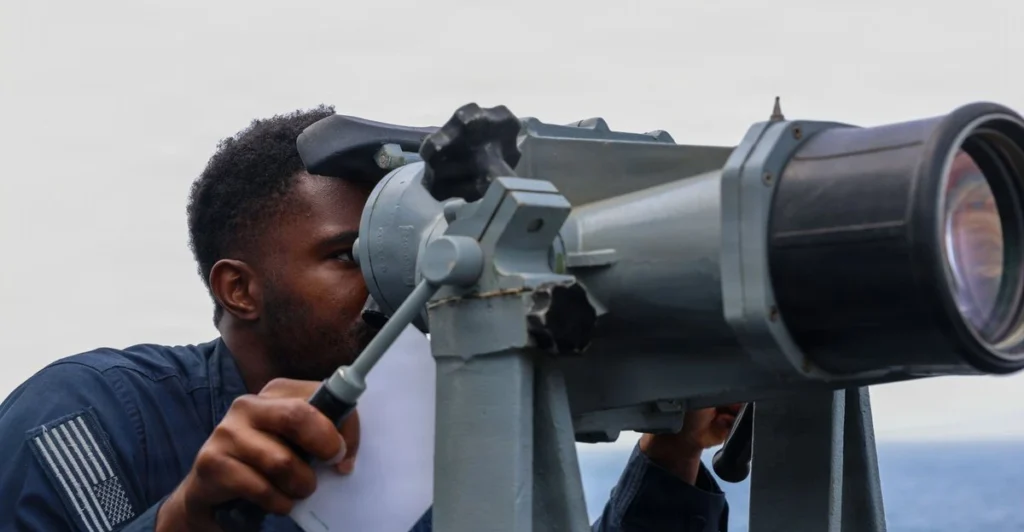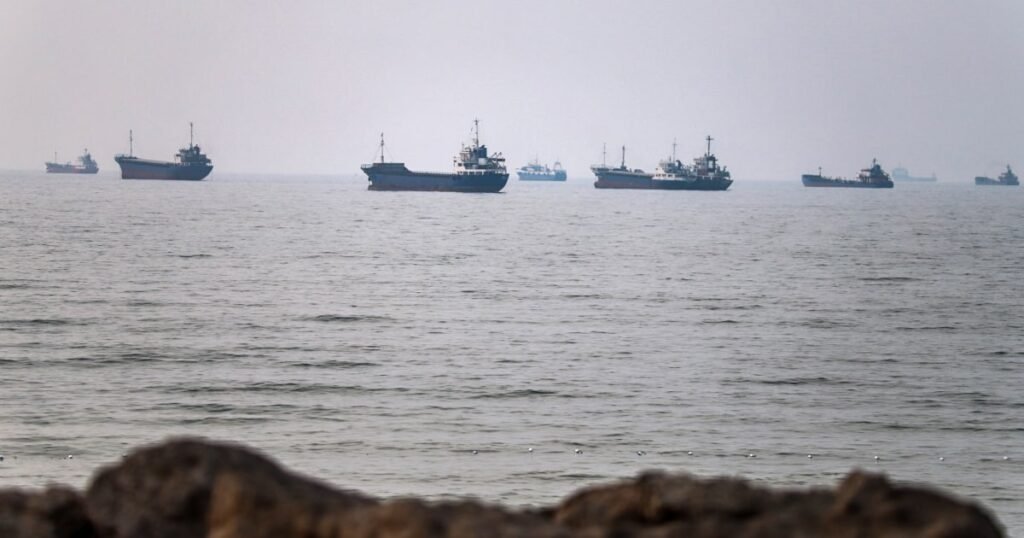
The Revolutionary Guard said it had warned that “foreign interference and the unlawful designation of shipping routes in the Strait of Hormuz would be met with a firm response and would disrupt the increasing flow of maritime traffic through the strait.”
It said its military struck one vessel with warning fire and stopped it after it “switched off its tracking and identification systems, thereby endangering maritime security.”
“The Strait of Hormuz is closed until further notice and will remain closed until the end of U.S. interference in the region,” the Revolutionary Guard said.
“No vessel will be permitted to transit the strait,” it said.
Early Sunday ET, after the U.S. strikes, CENTCOM declared the strait open, despite Iran’s claim that the bottleneck along its shoreline is shuttered.
“Iran does not control the Strait of Hormuz,” CENTCOM said. “It remains an international waterway. U.S. forces are positioned and prepared to keep it that way.”
Of the strait, it said, “Traffic is flowing.”
Khamenei pledges revenge
The rapid return to warlike stances took place in the wake of the burial in the holy city of Mashhad of Ayatollah Ali Khamenei, who was killed Feb. 28 in the opening strikes of the war.
Iran’s new supreme leader, Mojtaba Khamenei, promised Sunday to take revenge for his father’s death.
“We pledge that we will take revenge for the pure blood of the martyred leader and all the martyrs of these two wars from the criminal and disgraced killers,” he said in a funeral message reported by Iranian state media.
“Revenge is the demand of our nation and must certainly be carried out,” he added. “Soon, the free people of the world will carry out a part of this divine mission.”
Mojtaba Khamenei, 56, was seriously wounded in the attack that killed his father, sources have told NBC News. Though Iranian officials have downplayed reports of his injuries, no photo or audio recording of him has been released.
The younger Khamenei, who has not been seen since the war began, did not attend any public events as part of his father’s sprawling funeral ceremony, during which his body was taken to five cities in Iran and Iraq. The statement attributed to him, like all others issued in his name as supreme leader, was a written message.
The late supreme leader was laid to rest at the shrine of Imam Reza, Iran’s holiest Shia Muslim site, on Thursday, marking the end of six days of public mourning ceremonies. Neither the U.S. nor Israel directly targeted funeral sites during the ceremonies.
Warning from Trump
Trump earlier warned Iran against any attempts to assassinate him after Khamenei’s funeral featured numerous English-language banners openly calling for him to be killed along with Israeli Prime Minister Benjamin Netanyahu.
A thousand missiles “are Locked and Loaded and aimed at the Islamic Republic of Iran, with thousands of more to immediately follow, should the Iranian Government act on its threat,” Trump wrote in the overnight post.
Source link