Breaking Airline News: US Government Deploys Massive New Federal Rule to Rescue Disabled Passengers from Paralyzing Travel Chaos
As paralyzing boarding delays, terrifying mobility device destruction, and severe operational negligence violently threaten to completely choke the United States’ domestic aviation network, the federal government has executed a high-stakes infrastructural maneuver. In a desperate bid to physically and psychologically rescue millions of Americans with disabilities from the terrifying threat of extreme travel chaos triggered by poorly trained airline staff, the Department of Transportation (DOT) has aggressively launched a massive tactical intervention. Officially rolling out a monumental new regulatory framework set for implementation in June 2026, the government is forcefully rewriting how airlines legally interact with passengers requiring mobility assistance. By aggressively establishing this unified federal defense perimeter, this deployment is directly fighting to prevent the complete collapse of accessible passenger mobility, ensuring that furious corporate travelers and tourists who rely on wheelchairs are no longer trapped by the terrifying unreliability and severe degradation historically defining accessible air travel.
In a harrowing display of modern aviation vulnerability, the sheer logistical nightmare of attempting to navigate an airport in a wheelchair has historically forced passengers into terrifying transit scenarios. For decades, attempting to survive a simple domestic flight required travelers to endure highly fragile boarding processes, manually navigating deeply congested terminals while relying on airline staff who frequently lacked the physical training to safely execute aisle-chair transfers. This disjointed operational model frequently triggered terrifying bottlenecks, where a single mishandled transfer or a violently destroyed custom wheelchair shattered the fragile travel chain, spawning massive physical injuries, intense psychological trauma, and completely ruined global itineraries. However, the Department of Transportation is aggressively fighting back against this structural paralysis. By forcefully locking airlines into rigid, federally mandated training and liability standards, the government ensures that passengers can violently slash their exposure to cascading logistical failures. This highly optimized regulatory routing completely decompresses transit anxiety, ultimately shielding millions of travelers from the agonizing misery of paralyzed transport networks by guaranteeing total accountability when mobility devices are placed in an airline’s care.
Expanded Overview: The Massive Scale of the Transit Contagion
The terrifying crisis of overwhelming passenger stress currently gripping accessible travel brutally exposes the severe limitations of flying without rigid government oversight. Recognizing that aggressively forcing travelers to surrender their custom, highly expensive mobility devices into a dark cargo hold leads directly to severe psychological friction, aviation authorities are attempting to forcefully decompress the tension. The sheer scale of this new federal operation is immense. While the main thrust of improved training and wheelchair handling goes active in June 2026, the government is already preparing secondary enforcement waves targeting massive liability payouts for damaged devices later in the year. This massive infrastructural shift will aggressively decentralize the industry’s reliance on inconsistent, airline-specific training videos, entirely destroying the terrifying threat of connection-induced travel chaos and establishing a powerfully resilient, hyper-accountable transit bridge for the disability community.
Section-Wise Breakdown: The Operational Realignment
Breaking the Accessibility Transit Gridlock
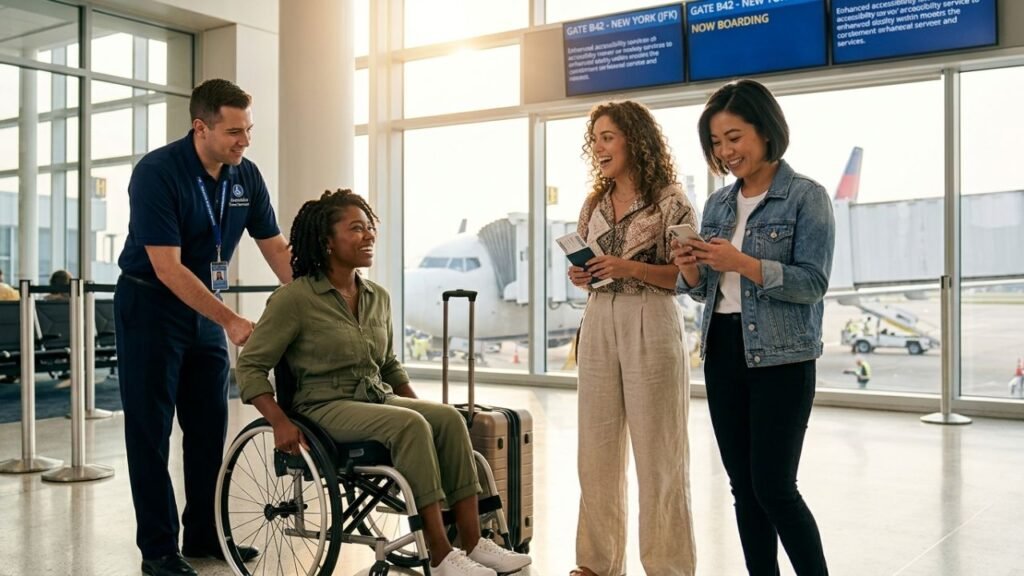
To survive the terrifying surge in global travel demand without triggering immediate terminal meltdowns, this massive deployment specifically targets the highly vulnerable boarding and deplaning process. Instead of risking a terrifying stranding in a crowded terminal because an agent was not dispatched to assist, travelers will aggressively utilize the new federal standards. The rule forces airline agents and flight crews to actively support passengers through the entire physical boarding flow. This aggressive network linking ensures that disabled travelers are entirely shielded from the terrifying mass confusion currently paralyzing competing legacy transit hubs, offering massive physical security and respect from curbside to the cabin seat.
Deploying the Training Tactical Shield
To guarantee the absolute reliability of this restored operational model, the DOT has executed a brilliant strategic deployment of operational requirements. The government has violently outlawed the use of basic, checkbox learning modules. Airlines are now forcefully mandated to implement massive, hands-on, scenario-based physical training. This means staff must demonstrate real-world physical competence in pushing wheelchairs, transferring travelers with profound dignity, and safely navigating the highly congested aisles of narrow-body aircraft. This strategic defense mechanism drastically elevates the passenger experience, completely bypassing the extreme physical danger usually associated with untrained ramp agents attempting complex lifting maneuvers.
Securing the Mobility Device Lifeline
The massive infrastructural shift aggressively centers around completely defending the physical survival of the passenger’s mobility equipment. The new mandate aggressively targets the terrifying moment a traveler is separated from their wheelchair. Airlines must now violently overhaul their tracking systems, providing real-time notifications directly to the passenger when their scooter is safely loaded and when it is successfully returned at the destination. Most critically, if an airline violently destroys a wheelchair in transit, the airline is now forcefully required to immediately provide a suitable loaner device while executing rapid repair, replacement, or financial compensation, utterly destroying the terrifying era of abandoning disabled passengers at baggage claim.
Defending the Passenger Experience
Looking beyond the immediate terminal logistics, this massive project aggressively protects the long-term civil rights of the traveling public. Strongly backed by massive advocacy groups including the Paralyzed Veterans of America, this rule signals a massive shift from treating disabled travelers as “accommodations” to treating them as a core, protected pillar of the aviation economy. Furthermore, the DOT is simultaneously pursuing massive structural upgrades, actively pushing future proposals to aggressively expand lavatory accessibility on aircraft, ensuring that ultra-long-haul flights no longer act as a terrifying physical barrier to international tourism.
Strategic Accessible Aviation Regulatory Matrix
To fully comprehend the massive logistical and strategic fallout of this new network integration, corporate travel managers and affected tourists must review the exact operational metrics defining the DOT deployment. The following matrix provides a granular breakdown of the specific, officially verified strategic data driving this massive disruption mitigation effort.
| Strategic Aviation Metric | Confirmed Regulatory Implementation Data |
|---|---|
| Executing Federal Agency | United States Department of Transportation |
| Primary Implementation Timeline | June 2026 |
| Secondary Enforcement Phase | Liability & Reimbursement Provisions (Late 2026+) |
| Critical Passenger Protections | Mandatory Loaner Wheelchairs & Real-Time Loading Notifications |
| Operational Staff Requirement | Hands-On, Scenario-Based Physical Assistance Training |
| Key Advocacy Group Supporter | Paralyzed Veterans of America |
Passenger Impact: Surviving the Logistical Jump
For the millions of global tourists and corporate commuters attempting to navigate the rapidly expanding domestic transit corridors with mobility aids, this massive federal deployment represents a highly anticipated lifeline against severe operational failures. The brutal reality of enduring a terrifyingly sudden delay, only to realize your custom, $20,000 wheelchair has been violently crushed in the cargo hold without immediate recourse, inflicts intense psychological trauma and completely destroys meticulously planned itineraries. By aggressively deploying this massive regulatory oversight, the U.S. government is attempting to actively prevent the terrifying friction that results in severely abandoned travel plans and entirely ruined cross-continental business deals.
Survival Guide for Transit Travelers
Travelers desperately preparing to navigate the modernized U.S. network in summer 2026 must immediately execute the following survival protocols:
- Leverage Federal Enforcement Shields: Passengers attempting complex inter-state jumps must aggressively demand the new standard of hands-on boarding assistance; if an airline fails to provide the required support or abandons a passenger during deplaning, travelers must immediately leverage the new DOT reporting structures to force rapid, high-level accountability.
- Exploit the Mobility Tracker: Disabled travelers must relentlessly utilize the new real-time loading notification system; because the separation from a mobility device triggers intense transit anxiety, monitoring this data ensures the passenger is completely shielded from the terrifying uncertainty of a lost wheelchair.
- Demand Immediate Loaner Security: If a device is catastrophically damaged by a ramp agent, the passenger must absolutely refuse to leave the terminal without the airline physically providing the federally mandated loaner wheelchair or scooter, completely bypassing the massive operational risk of being stranded at an unfamiliar destination.
Industry Analysis: The Economics of Tactical Equality
From a strategic aviation perspective, the travel turmoil currently forcing these massive network realignments highlights the terrifying vulnerability of airlines operating without standardized care. Industry analysts confirm that securing massive, uniform physical training standards across the entire U.S. grid is an absolute masterstroke in corporate risk management. Historically, airlines that attempted to cut corners on wheelchair handling frequently suffered terrifying financial lawsuits and massive public relations disasters. The aggressive DOT strategy lowers systemic risk, providing the disability community with massive domestic access while shielding the airlines from the brutal reality of their own operational negligence, ultimately insulating the aviation ecosystem from severe capacity-induced travel chaos.
Conclusion: A Strategic Retreat to Ensure Aviation Survival
As the extremely critical summer 2026 global travel season accelerates, the massive deployment of this DOT rule represents a massive warning to airlines attempting to force disabled passengers through outdated, dangerous transit processes. The aggressive maneuvering by federal officials proves that capturing market dominance requires terrifyingly swift and highly optimized physical integration, connecting passengers safely to their seats while shielding their vital mobility devices from the brutal reality of cargo-hold destruction. Corporate travel buyers, advocates, and everyday passengers attempting to navigate this highly unstable era of airport disruptions must embrace these new, highly efficient regulatory lifelines. By acting aggressively to leverage optimized, federally backed flight standards, travelers can successfully survive the intense travel surges and completely avoid the paralyzing threat of connection-induced travel chaos.
Key Takeaways
- Massive Tactical Intervention: The U.S. Department of Transportation is aggressively rolling out a massive new regulatory rule in June 2026 to completely bypass the severe travel chaos inflicted upon passengers with disabilities.
- Crushing the Boarding Gridlock: The federal mandate violently outlaws basic video training, forcing airlines to execute massive, hands-on, scenario-based physical training for all boarding and transfer procedures.
- Strategic Cargo Defense: Airlines are now aggressively required to provide real-time tracking notifications when a wheelchair is loaded and unloaded from the cargo hold.
- Global Ecosystem Expanded: If a mobility device is destroyed in transit, the airline is legally mandated to provide a suitable loaner wheelchair while executing rapid repair or massive financial compensation.
- Traveler Advisory: Strongly backed by the Paralyzed Veterans of America, disabled passengers navigating the U.S. domestic grid starting in June 2026 must aggressively leverage these new federal rights to completely shield themselves from the severe operational unpredictability of legacy airline assistance.
Related Travel Guides
Disclaimer: The information presented in this article is based on official regulatory announcements from the U.S. Department of Transportation available as of June 10, 2026. The implementation of specific training protocols, liability timelines, and enforcement mechanisms remains highly dynamic and subject to ongoing federal review. Passengers are strongly advised to verify their specific rights and airline obligations directly with the DOT and their carrier prior to travel.
Source link